
Nick Bryant

Software.
Systems.
Worlds.

I build things from the first idea to the working product.
Explore the work ↘

Conceptual terrain study of an imagined generative world

01 / An engineering atlas

02Interactive work

Generative worlds

Games, authoring systems, and small experiments where procedural structure meets deliberate worldbuilding.

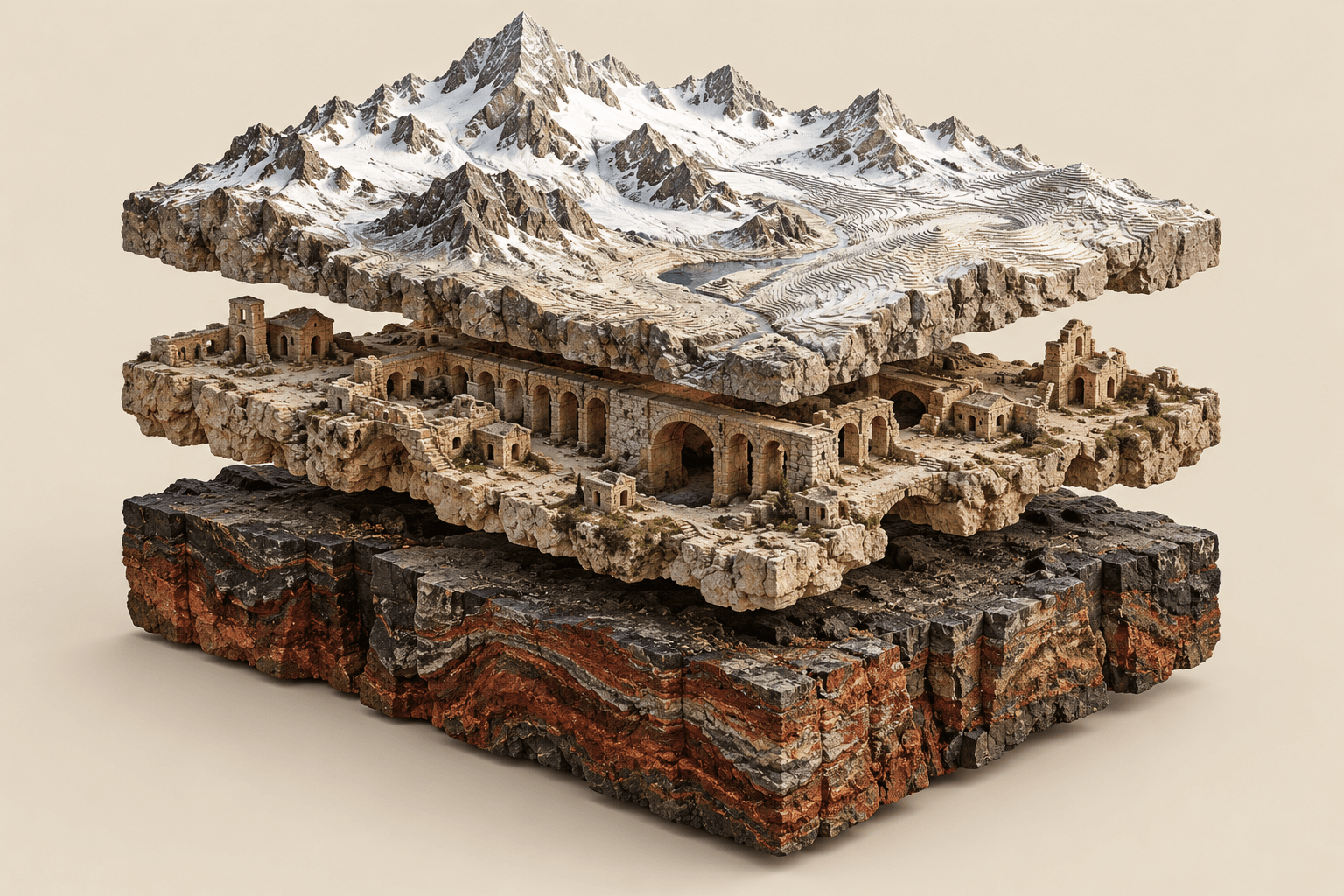
Conceptual landscape cross-section from desert mesas to alpine peaks
Concept study / Terrain, rules, inhabitation
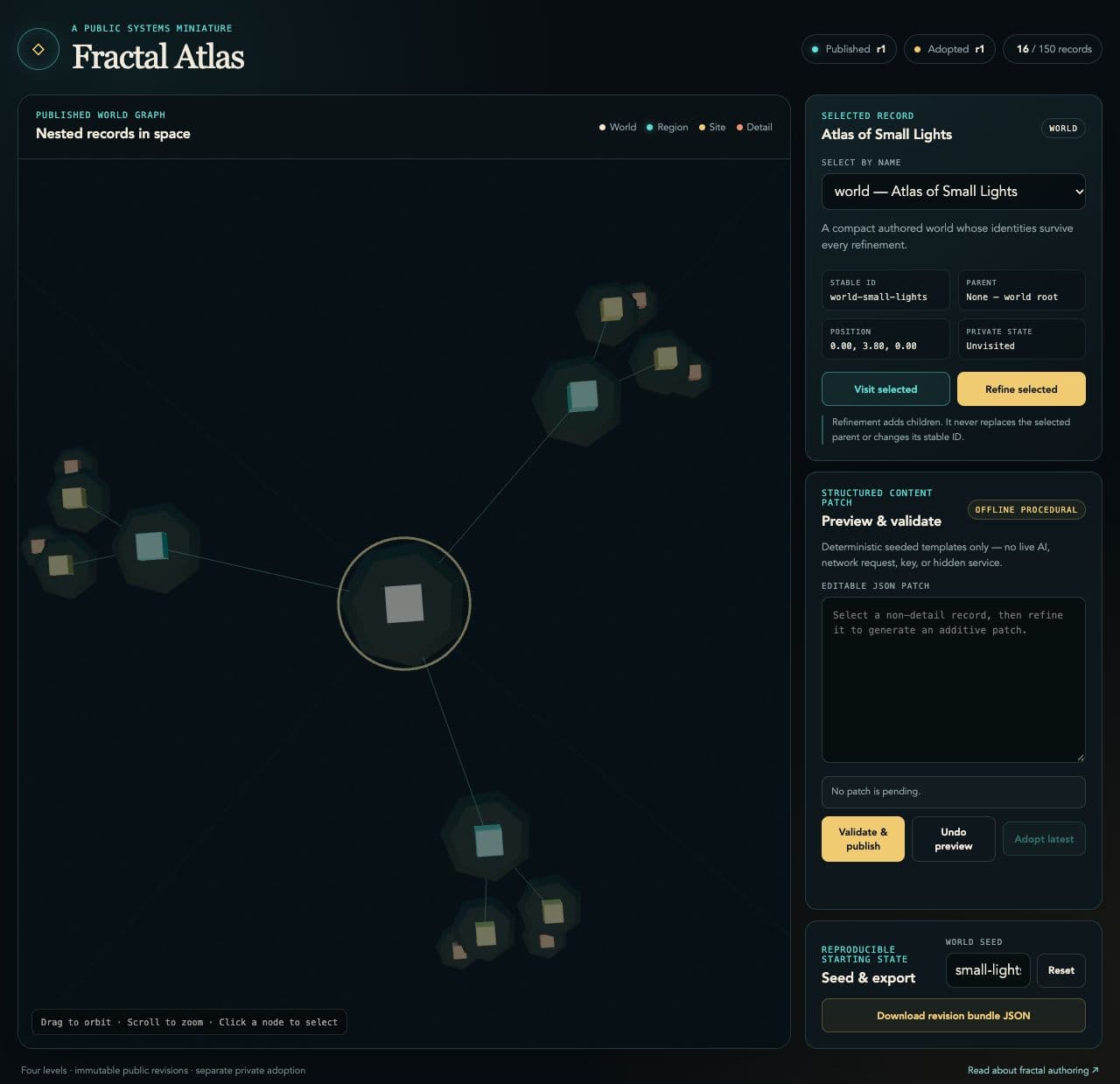
The Lower Worlds project screenshot

01 / Field study

The Lower Worlds

Generative authoring · TypeScript / React / Three.js

An experimental generative-authoring system in TypeScript, React, and Three.js. Models and people define the world, schemas validate and version it, and deterministic rules run the game while player progress stays private.

Explore the architecture

The authoring stack separates intent, validated schema, versioned world definitions, and deterministic runtime state so generated content can remain inspectable.

System plate / 04

The Lower Worlds · architecture study

Illustrative assembly

An exploded isometric illustration of software architecture showing the intent, schema, world, and runtime layers of The Lower Worlds software architecture.

World. Versioned, reusable definitions preserve a coherent world across play.
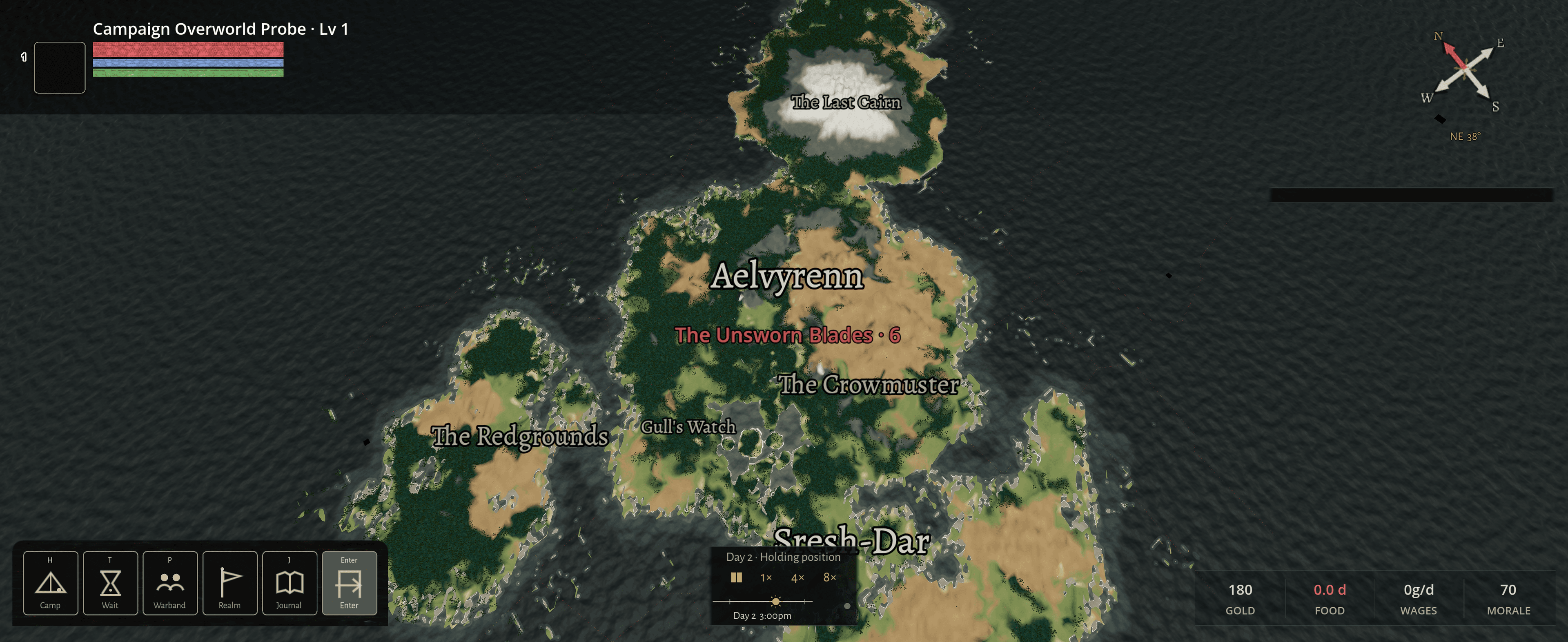
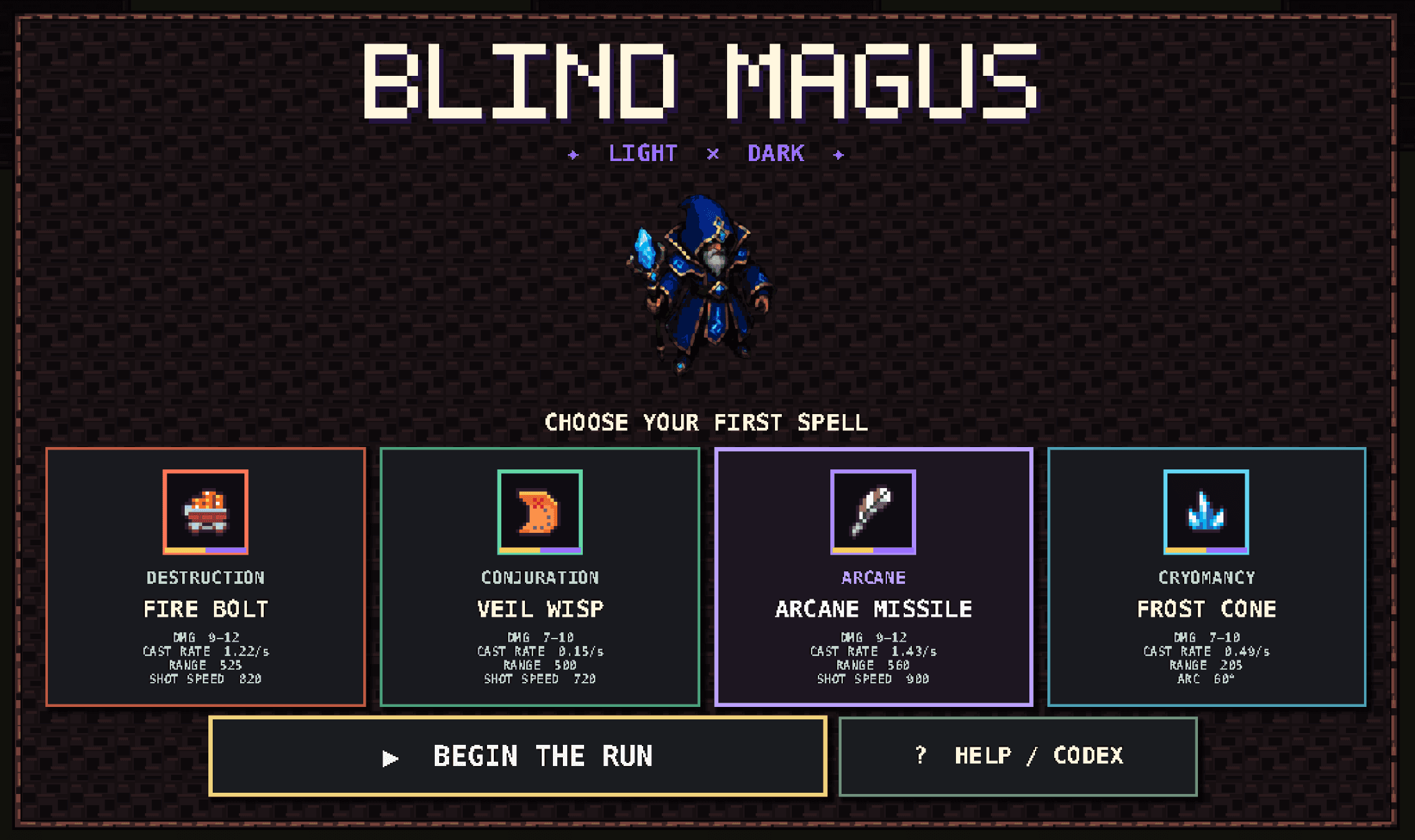
Blind Magus project screenshot

03 / Field study

Blind Magus

Released action game · Independent

A released action game built around combining spells into new effects.

The Lower Worlds: Awakening project screenshot

06 / Field study

The Lower Worlds: Awakening

Creator and engineer · Playable prototype

A third-person dungeon adventure in Godot 4.7: prepare at Highbridge, explore the ruins below, and choose when to return to defend the garrison. Typed GDScript, physical puzzles, persistent progression, and rendered gameplay verification.

Chapter 02 / Applied intelligence

Agents &
systems

Local-first tools that make model work inspectable, bounded, and useful in the physical or commercial world.

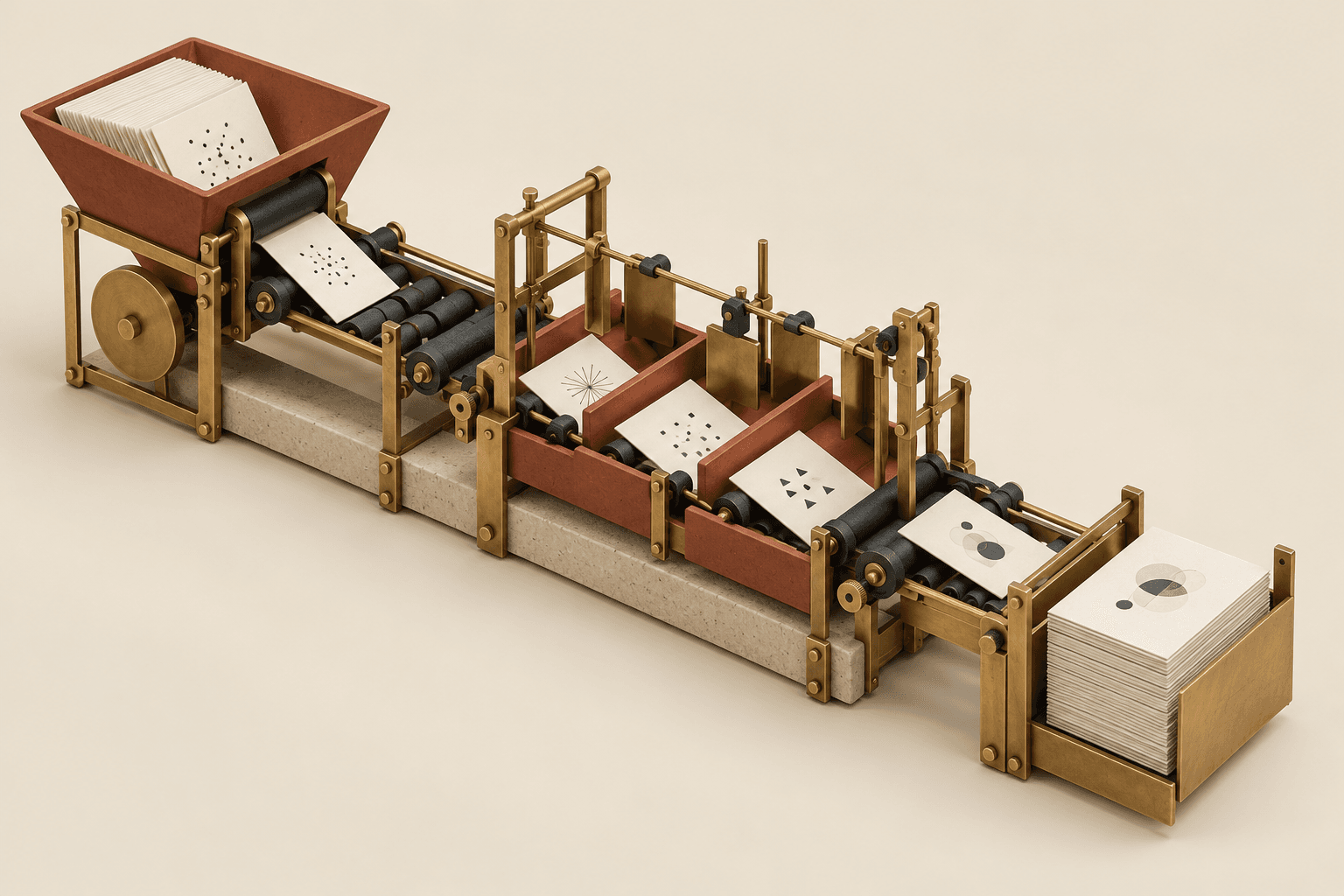
Conceptual study of a speculative workshop machine
Conceptual study / Not actual hardware
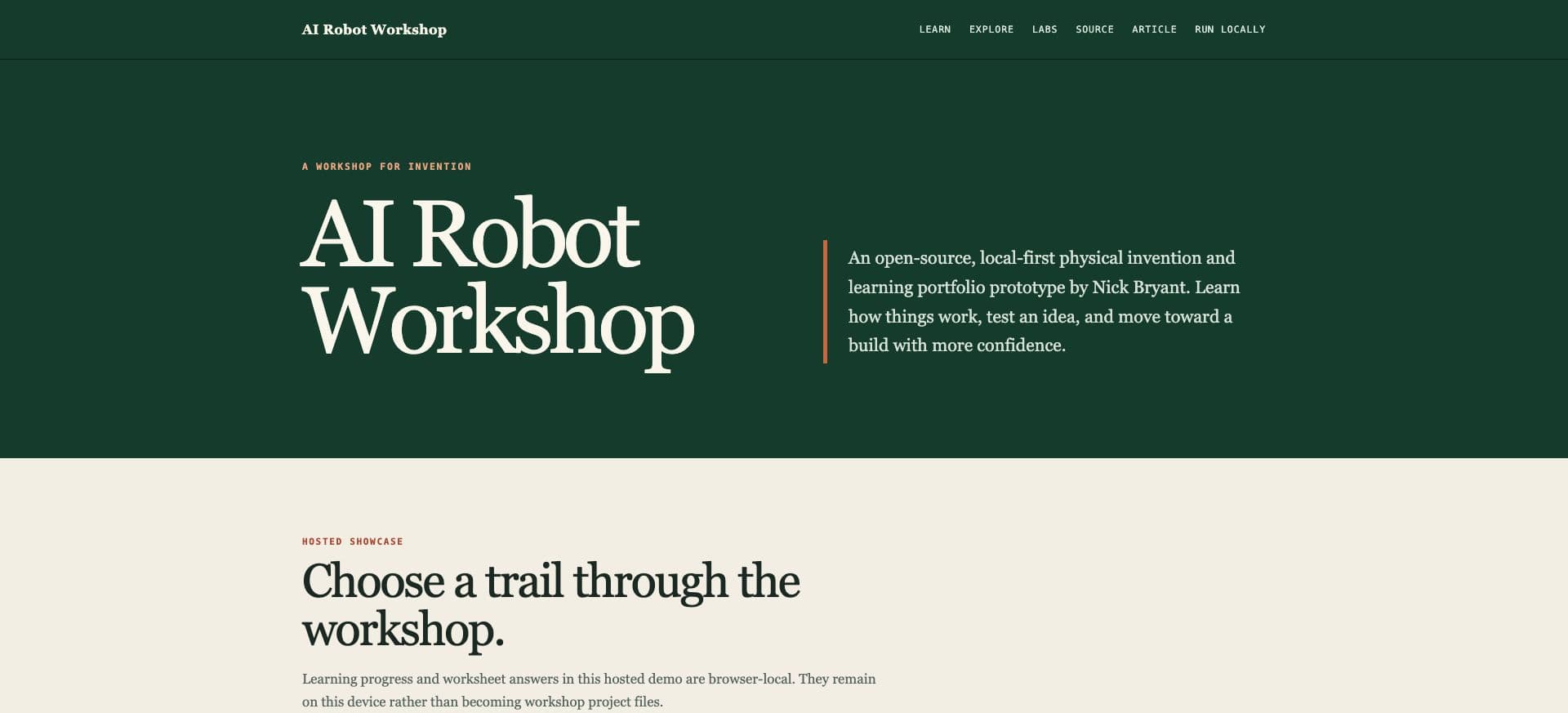
AI Robot Workshop project screenshot

01 / Working system

AI Robot Workshop

Open source · Local-first agent workflow

Turns agent conversations into inspectable plans, firmware, parts records, bounded models, and bench observations. The documented hardware routes remain unbuilt.

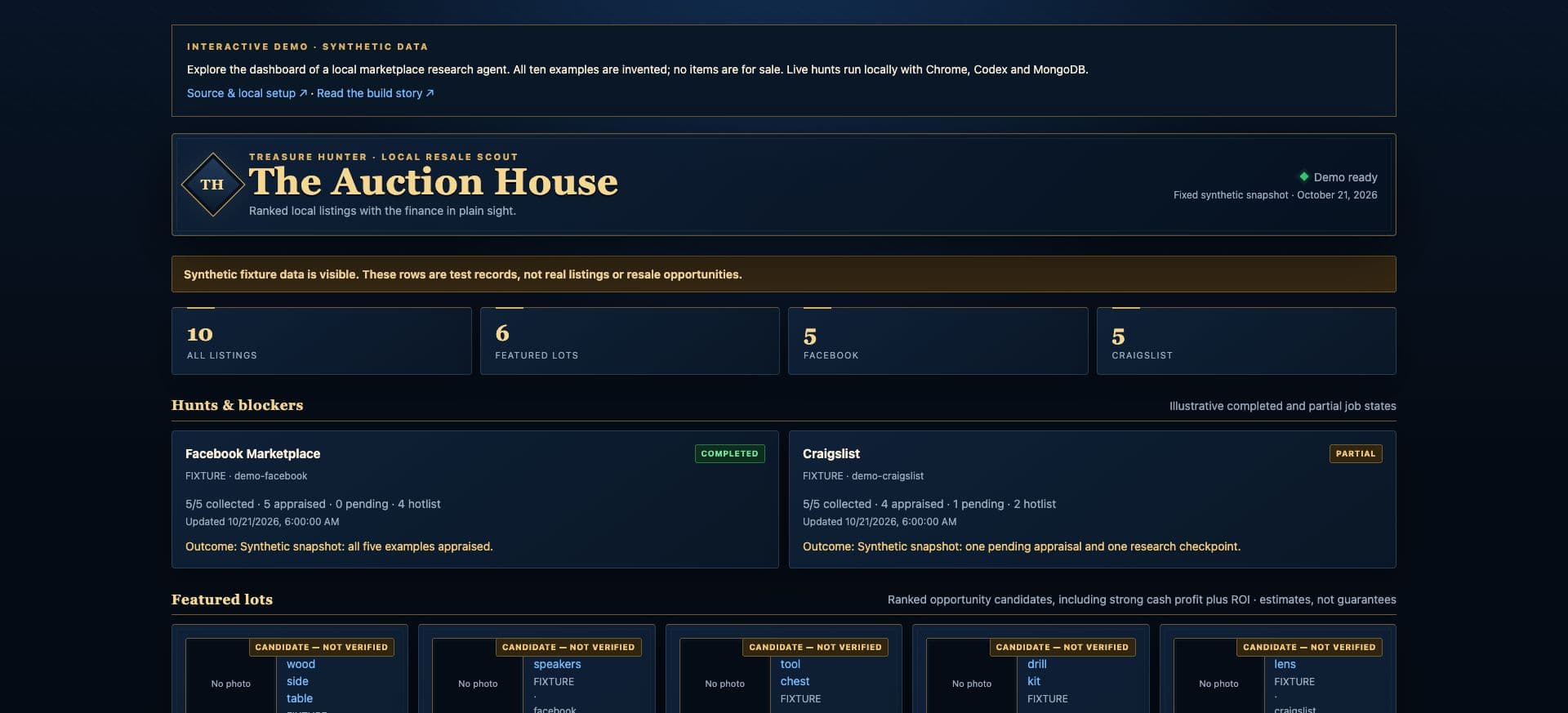
Treasure Hunter project screenshot

02 / Working system

Treasure Hunter

Creator and engineer · Local agent system

A local, chat-operated marketplace agent that values every collected item, persists evidence and checkpoints, and explains its ranked results in a live dashboard.

Chapter 03 / Field notes

Writing from the work

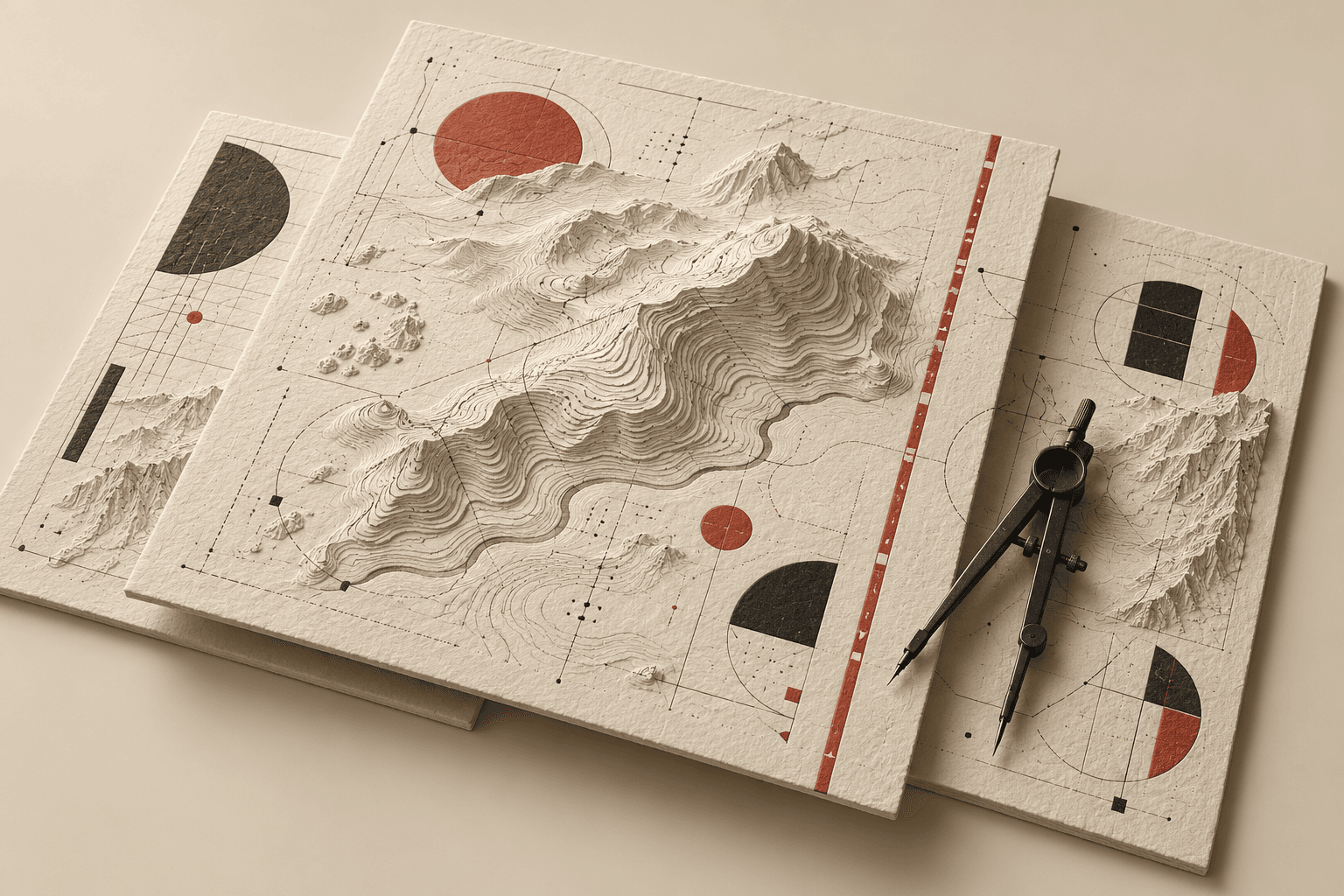
Conceptual editorial study of embossed terrain and printing plates
Concept study / Ideas made durable
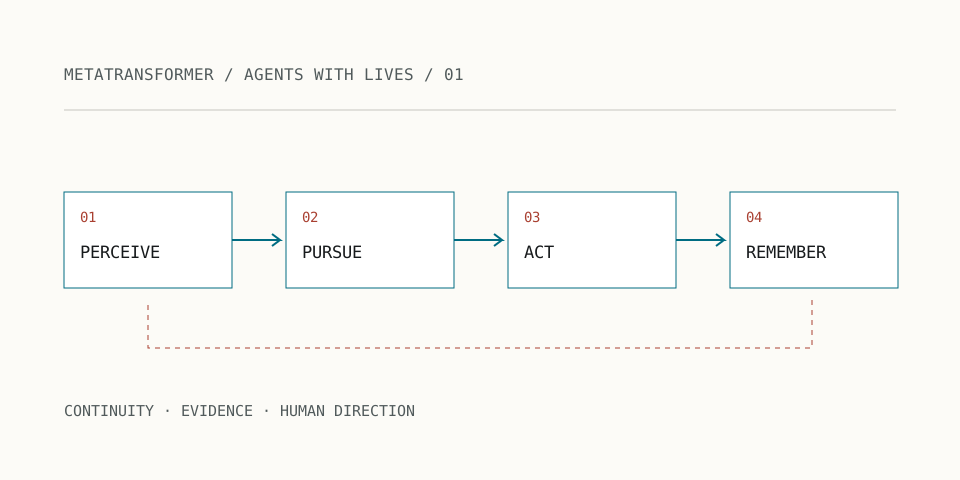
  1. Give Agents Lives, Not Just Jobs

    A1

    Give Agents Lives, Not Just Jobs

    Why I think ongoing pursuits, embodied experience, and a limited point of view can give agents something more interesting to say.

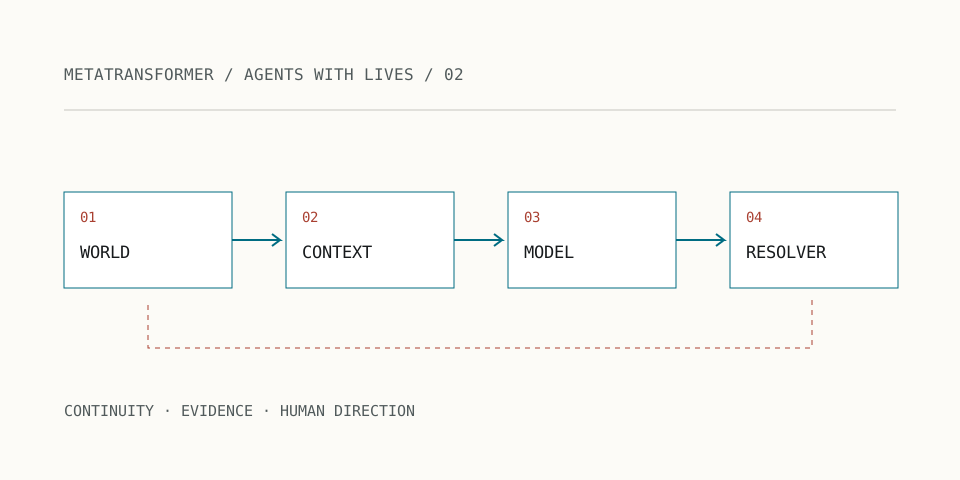
  2. A Small Model With a World Around It

    A2

    A Small Model With a World Around It

    What my local-model companion experiments taught me about structured output, useful conversation, and the architecture around a model.

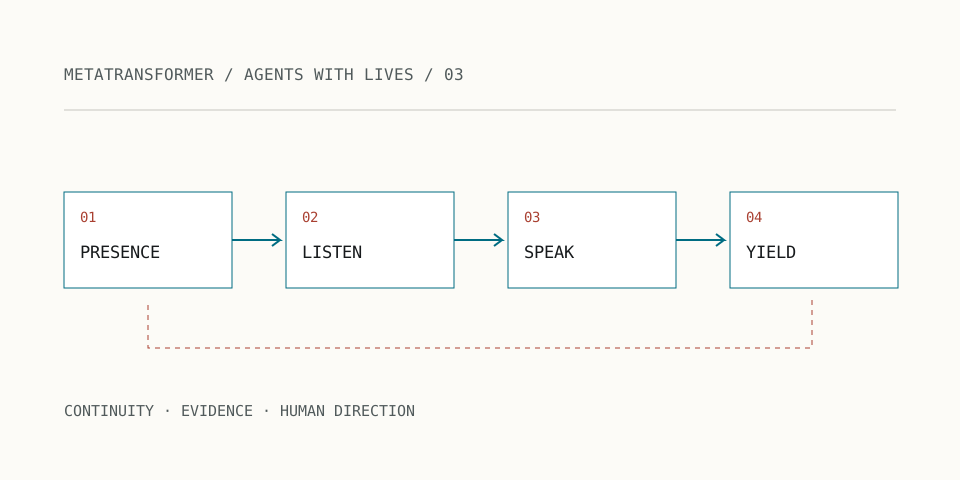
  3. Human–Agent Interaction Is More Than Chat

    A3

    Human–Agent Interaction Is More Than Chat

    Presence, silence, interruption, and selective memory are part of the interface when an agent has a continuing life.

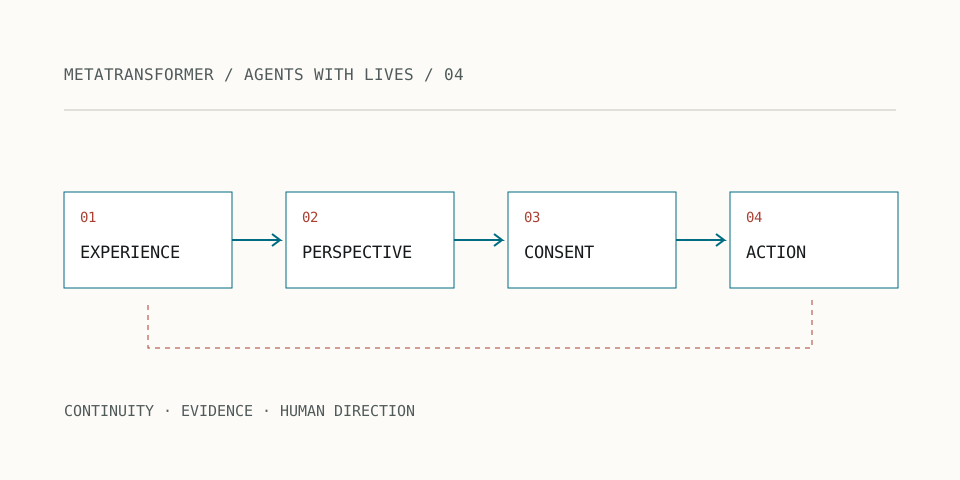
  4. Digital Twins Need More Than Your Chat History

    A4

    Digital Twins Need More Than Your Chat History

    A useful twin needs a history of changing views, explicit authority, and a distinction between representing someone and becoming its own agent.

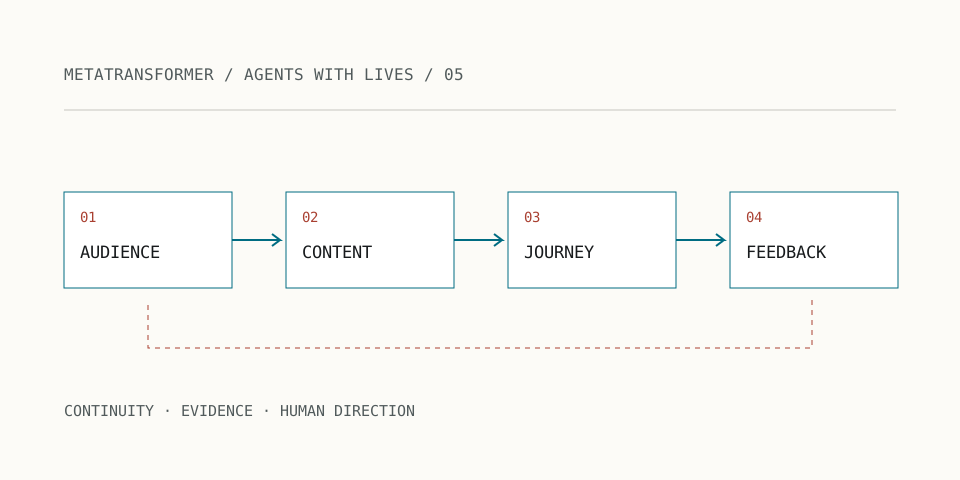
  5. Marketing Is a World Agents Can Work In

    A5

    Marketing Is a World Agents Can Work In

    Lessons from SFV and SMBIN: content, audiences, campaigns, and feedback form an environment an agent can understand.

  6. Treasure Hunter

    01

    Treasure Hunter

    Building an agent that values every item and exposes its evidence, uncertainty, and resumable state.

  7. AI Robot Workshop

    02

    AI Robot Workshop

    From a plausible agent answer to persistent project files, explicit evidence, and a buildable path.

  8. Fractal Authoring

    03

    Fractal Authoring

    Building The Lower Worlds Online, and a world that can keep becoming more specific.

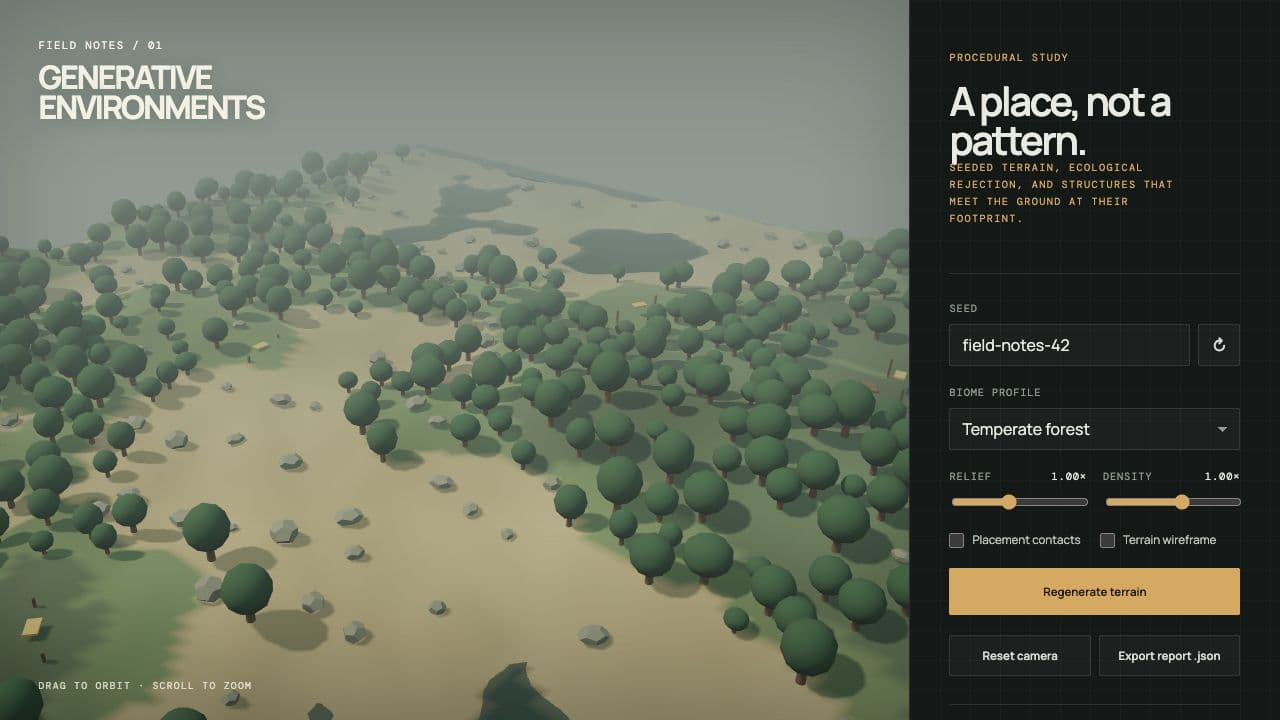
  9. Building procedural environments in Valenfeld

    04

    Building procedural environments in Valenfeld

    A practical look at shaping generated terrain into a world with authored intent.

  10. The Transformer Is the Transistor

    05

    The Transformer Is the Transistor

    A thesis on AI as a building block, and the verification and coordination infrastructure models need around them.

  11. The Lower Worlds: Awakening

    06

    The Lower Worlds: Awakening

    Building a home worth returning to: a playable Godot adventure, with in-engine screenshots and source.

Chapter 04 / About

Builder,
end to end.

Portrait of Nick Bryant

I’ve spent most of my career taking an idea and building the whole thing: the prototype, the product, and the team. Web, mobile, games, AR/VR, AI—I like learning what a hard problem needs and getting it working.

Right now I’m deep into agentic programming and generative worlds, trying to build things that weren’t practical a few years ago.

Denver / Boulder

Selected work

ARCOS / VN.AI

IP workflows · Next.js / Supabase / MongoDB / Redis / AWS

I led product engineering for IP management, permitted-use workflows, and content analysis. We connected roughly twenty model integrations and supported product pilots across the application and cloud stack.

Selected work

Procurement Sciences

B2B software · MERN / Python / FastAPI

I rebuilt an early Rails prototype as a MERN and Python/FastAPI product. I implemented the application, managed the engineering team, and hired the incoming CTO before the handoff.

Current · advisory

Investing systems

Investing / syndication · Co-founder, now advisory

I built investing and syndication software, AI-assisted underwriting workflows, investor reporting, and marketing automation for SMB Investor Network and Search Fund Ventures. My current role is passive advisory work.

2015–2020

Interesting Inventions

Consumer apps & games · Technical co-founder

Built and launched 5+ consumer applications through a holding-company portfolio, reaching nine-figure revenue scale.

Full career on the resume ↗
The Lower Worlds Awakening
The Lower Worlds Awakening project screenshot
← Selected work

Nick Bryant · October 21, 2026 · 6 min read

The Lower Worlds: Awakening — Building a Home Worth Returning To

A Godot dungeon-adventure prototype about exploration, preparation, and defending a living garrison—and the engineering work needed to make those systems meet.

Playable pre-production prototype · Godot 4.7 · macOS / Windows

I’m building The Lower Worlds: Awakening, a third-person dungeon adventure in Godot. Its central question is what makes a place worth coming home to. Exploring a ruin should change the garrison above it; caring about that garrison should change the decisions you make underground.

This is a playable pre-production prototype. The systems exist, but the human playtests that establish whether the raid loop and discovery progression work as intended are still pending. Publishing it is a way to put the work in people’s hands while keeping that distinction visible.

Awakening is a separate project from The Lower Worlds Online and its generative-authoring system. This game uses Godot 4.7, typed GDScript, and the Forward+ renderer. Its world runs through authored gameplay systems and procedural dungeon construction.

An expedition with a home at the other end

The player is Kael, a cadet of the Far Lantern Society. Highbridge is the expedition’s garrison; the Sunken Cut is the dangerous place below it. The design document describes the intended balance: physical exploration, ancient puzzles, warm moments at home, and defending something the player helped build.

That combination puts pressure on both halves of the game. A dungeon needs encounters and discoveries worth the trip. A garrison needs people, spaces, and responsibilities that make returning meaningful. If preparation only means clicking through a menu, or returning only means converting loot into a larger number, much of the premise disappears.

The prototype connects services, equipment, supplies, a limited bag, and persistent progression. A descent asks you to choose what to carry and when to leave. The garrison gives those choices somewhere to land: supplies to replace, discoveries to turn in, and preparations to reconsider.

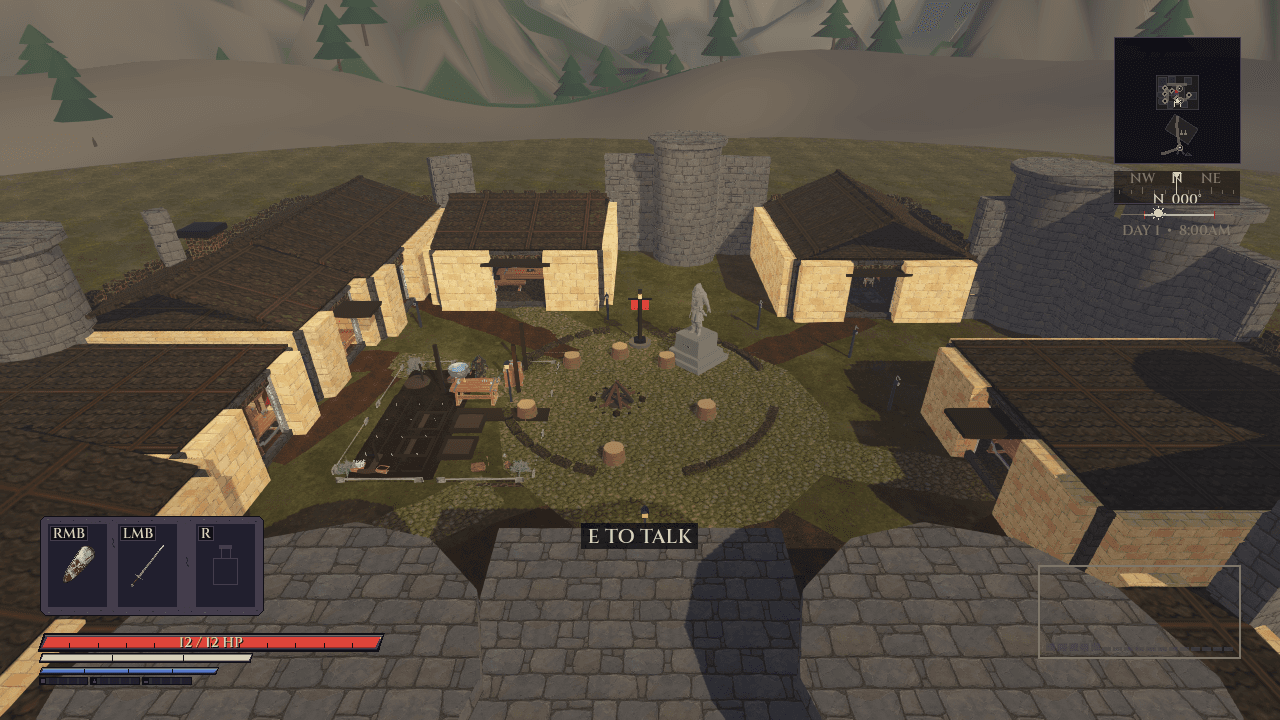
Highbridge's stone buildings and central courtyard seen from above
Highbridge, captured in-engine at 1280 × 720 from a raised inspection camera.

Make leaving a real decision

An Escape Rope is a counted item acquired before a descent. Starting its extraction channel consumes it. The physical stair remains another way home, with its own ordinary toll. A warning from above does not provide a free rescue or silently move the player out of the dungeon.

That matters when the garrison faces a raid. The implemented slice is deliberately bounded: one event after the Tally-Ledger donation, one optional West Gate Bolt-Thrower, warnings, and an attack through the main gate. A player can return to fight or rely on a completed defense. Failure has a specific recovery path involving the donated Ledger.

The interesting question is whether a player understands the warning and makes a deliberate choice. A script can establish that the raid starts and that the defense changes its outcome. It cannot establish that someone cared about the choice. The current proof plan keeps that human question open.

Reward what the player learned

Field Notes connect discovery to permanent progression. The run records fixed, first-time observations, including solving a gate cycle, opening a shortcut, or defeating the Cistern Warden. Returning completes those entries; filing them in the bedside book awards the notes, which Aldric accepts for doctrines. They do not occupy the bag, and repeating the same encounter does not manufacture more notes.

The prototype has five observations and three one-rank doctrines. Each doctrine costs two notes. That small arithmetic creates a choice: the player cannot purchase all three from the available observations. Effects adjust existing mechanics, such as extraction time or stamina recovery, instead of introducing another large system.

This is a useful scope constraint as well as a design choice. It lets me investigate whether discoveries give players a reason to descend again without first building a sprawling skill tree. The Field Notes contract records the limits and the persistence rules.

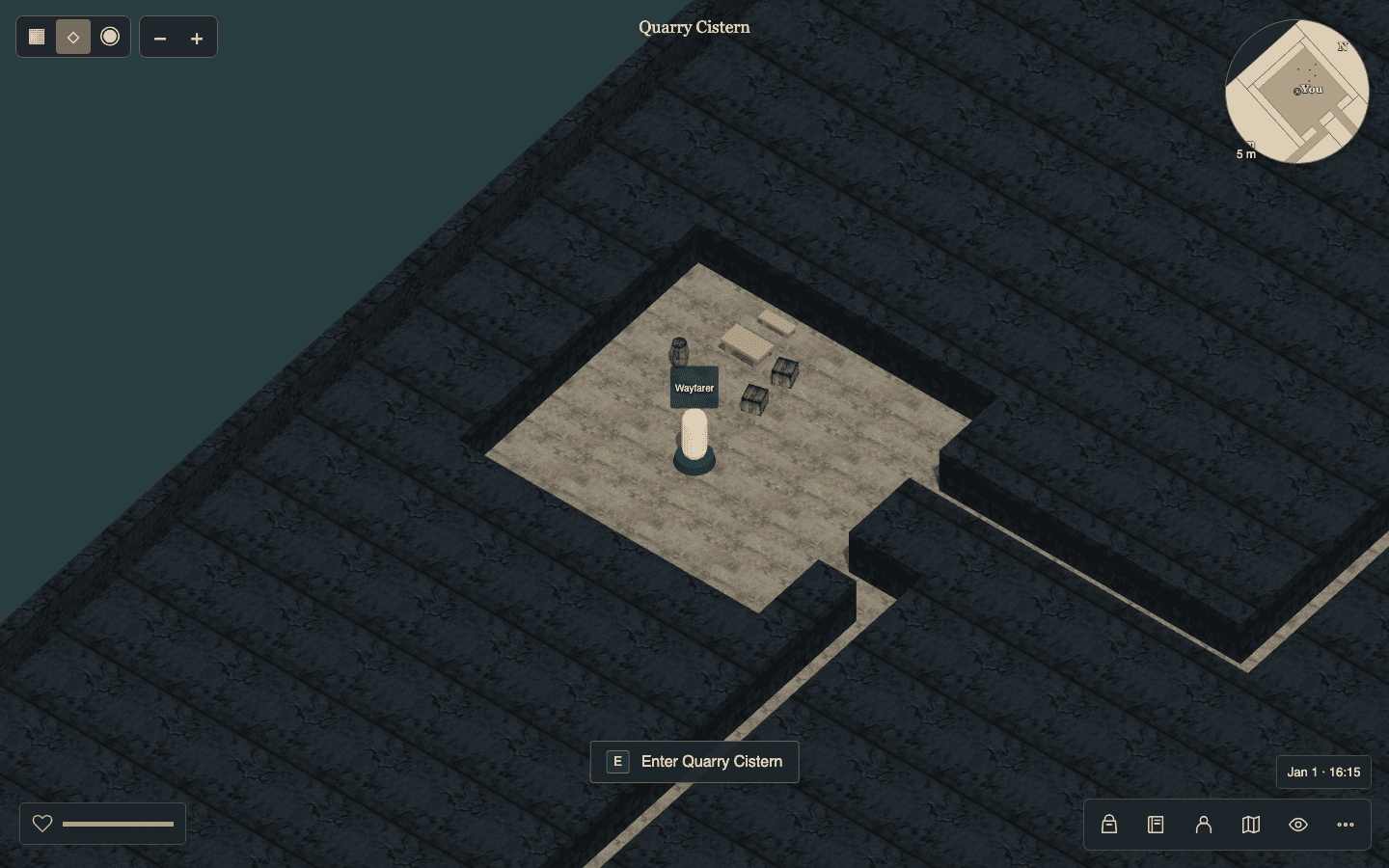
Kael exploring a stone chamber in the dungeon prototype
The dungeon prototype at native capture resolution. This is an in-engine frame from the gameplay verification run.

Physical verbs and readable spaces

The moment-to-moment reference is the deliberate movement, targeting, combat, and item-driven exploration of Ocarina of Time. That influence has to survive contact with a real controller, camera, doorway, and enemy. It is easy to describe a physical adventure and much harder to make its inputs and spaces agree.

The visual direction is PS2-era stylized realism: welcoming exteriors and dark interiors shaped by warm local light. The aim is for materials and silhouettes to give places identity while routes and threats remain readable. The current build still contains legacy presentation elements; these captures show the prototype rather than certify that the visual target is complete. The screenshots here are actual in-engine prototype captures, including a raised inspection camera over the garrison, rather than illustrations of a future game.

I use Forward+ for the desktop build and keep the screenshots at their captured resolution. A prettier image produced by an oversized render or a different camera can answer the wrong question. A gameplay view needs to show what a player will actually have to read.

Third-person view of Kael facing an enemy in the dungeon
Combat in the playable prototype, captured during the integration director's encounter beat.

The test has to be accountable too

The project uses scripted “directors” to exercise gameplay and photograph particular beats. The integration loop visits the garrison’s services, descends, fights, extracts, and returns. Those transitions are where independently working systems can stop agreeing: a screen intercepts input, a scene change drops state, or a purchase affects something other than the selected item.

The capture harness makes failures observable, and its launcher treats script errors as failed runs. The launcher also keeps automated windows from stealing keyboard focus and silences their audio, which matters when several development tasks share one machine.

A passing test still needs inspection. The repository documents cases where a director measured the wrong frame, read a widget hidden behind another screen, or reported success after a script error. That history has shaped the working method: check the instrument, inspect the captured result, and keep automated correctness separate from claims about enjoyment.

A prototype you can inspect

The current release is available for macOS and Windows on itch.io, with its source on GitHub. The Mac build uses ad-hoc signing rather than notarization, so macOS may require explicit approval to open it. The Windows export is available, but I have not established a Windows runtime test in this release pass.

The next meaningful evidence is people playing the bounded slice: whether they connect discovery to progression, understand the raid warning, and can explain why they stayed underground or returned. More content would not answer those questions by itself.

For me, this project brings game design and engineering into the same feedback loop. The code must preserve a player’s choices across systems, and the game must make those choices worth thinking about. Download Awakening, or inspect the source and design documents.