Nick Bryant

Software.
Systems.
Worlds.

I build things from the first idea to the working product.
Explore the work ↘

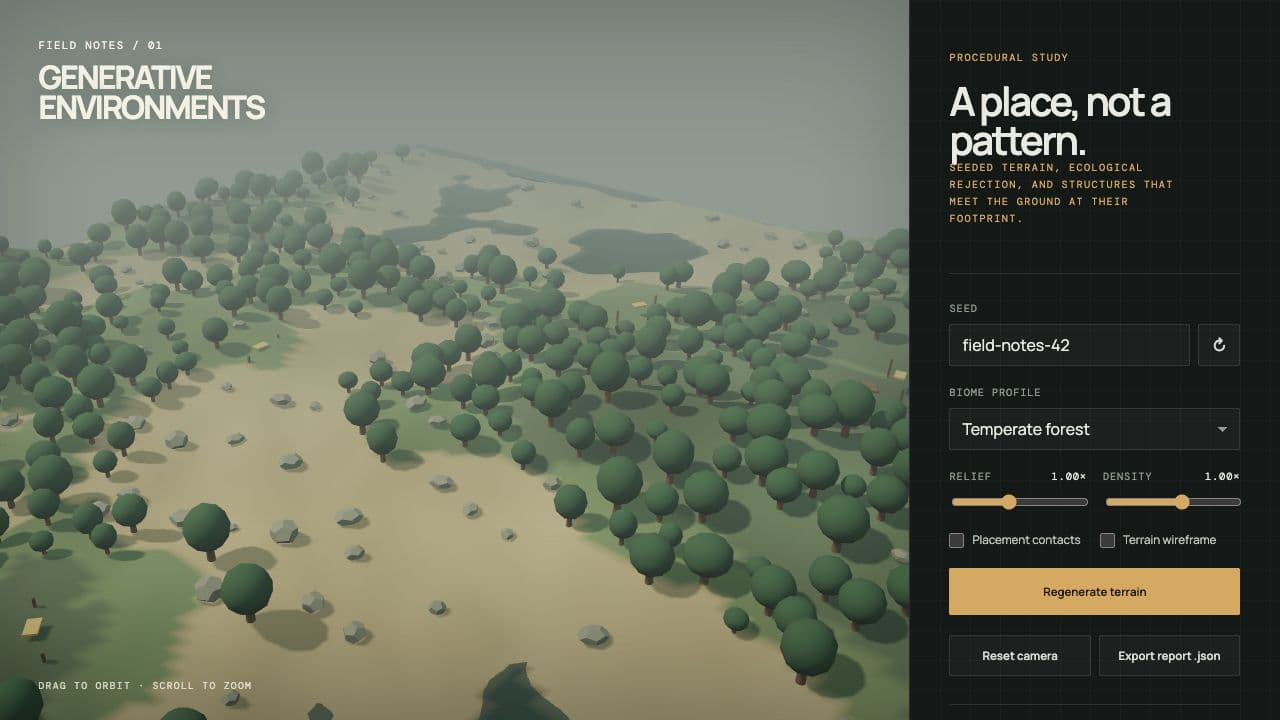
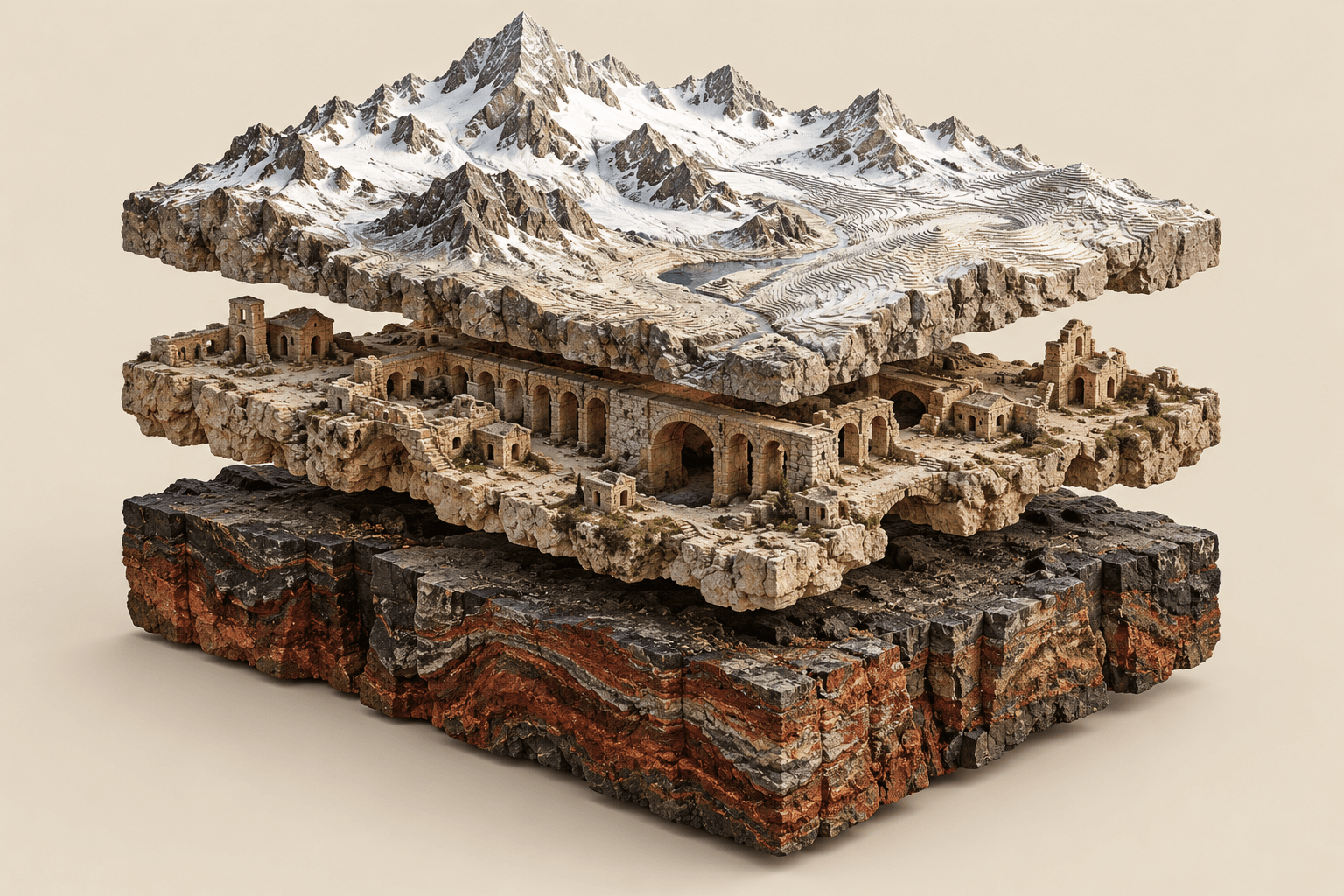
Conceptual terrain study of an imagined generative world

01 / An engineering atlas

02Interactive work

Generative worlds

Games, authoring systems, and small experiments where procedural structure meets deliberate worldbuilding.

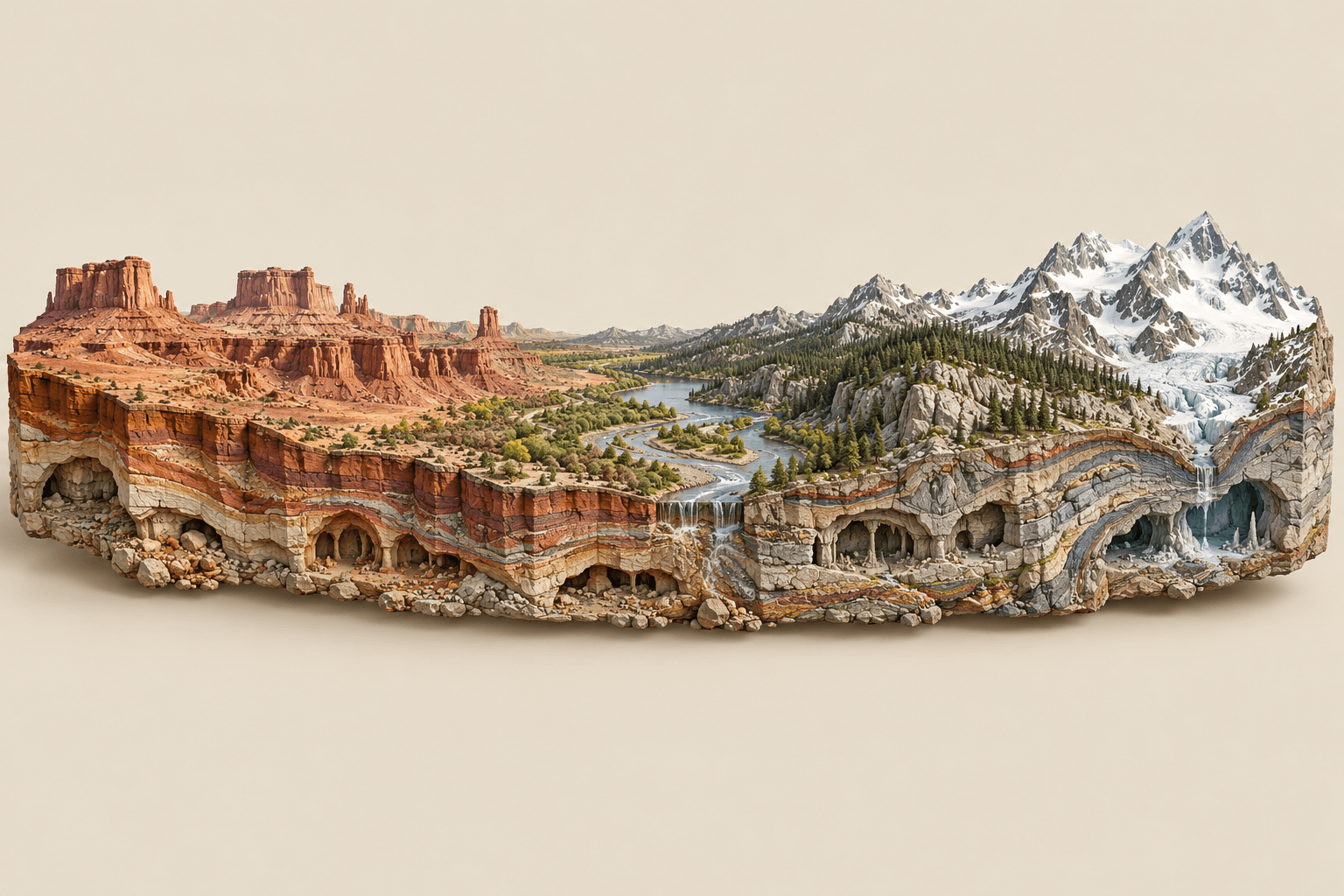
Conceptual landscape cross-section from desert mesas to alpine peaks
Concept study / Terrain, rules, inhabitation
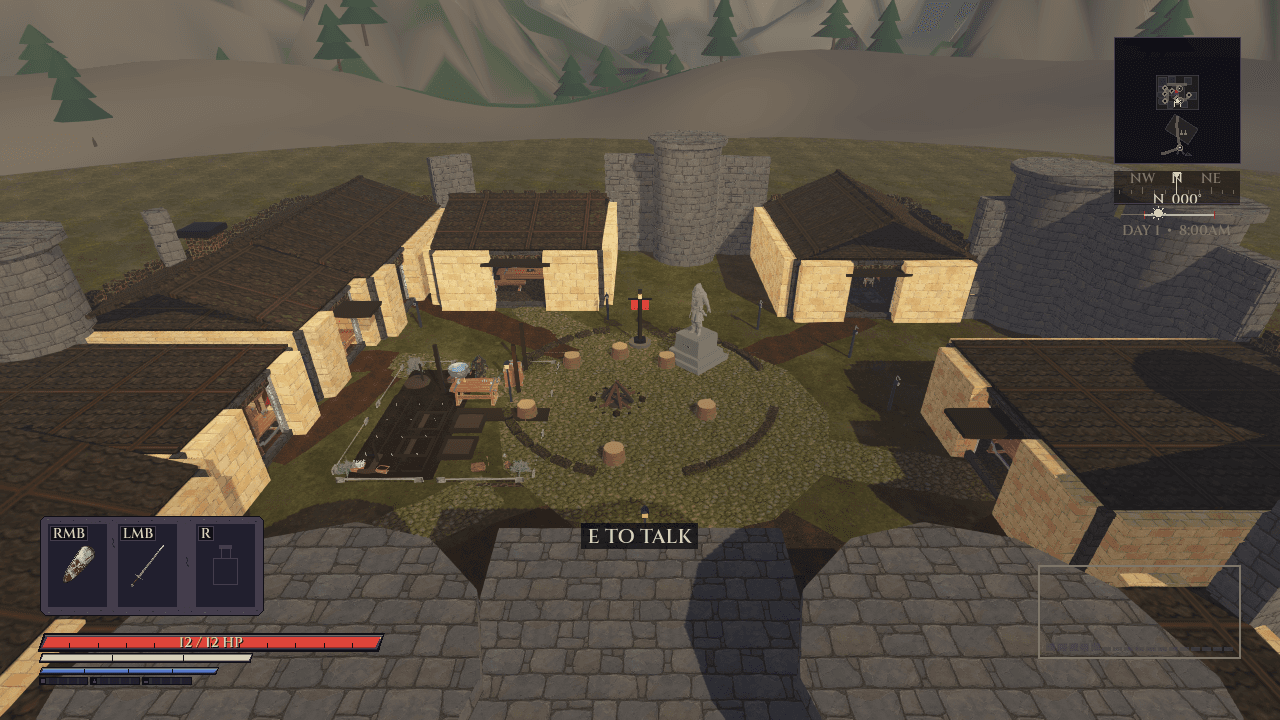
The Lower Worlds project screenshot

01 / Field study

The Lower Worlds

Generative authoring · TypeScript / React / Three.js

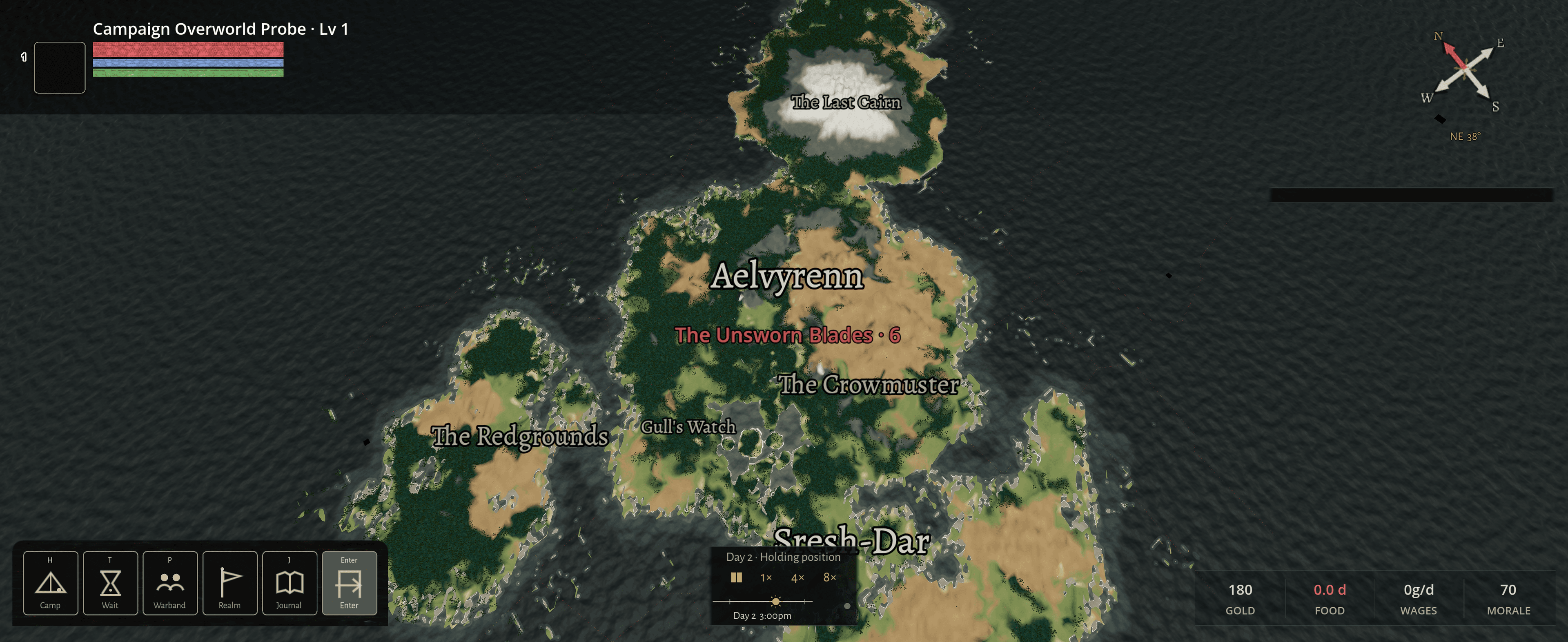
An experimental generative-authoring system in TypeScript, React, and Three.js. Models and people define the world, schemas validate and version it, and deterministic rules run the game while player progress stays private.

Explore the architecture

The authoring stack separates intent, validated schema, versioned world definitions, and deterministic runtime state so generated content can remain inspectable.

System plate / 04

The Lower Worlds · architecture study

Illustrative assembly

An exploded isometric illustration of software architecture showing the intent, schema, world, and runtime layers of The Lower Worlds software architecture.

World. Versioned, reusable definitions preserve a coherent world across play.

Blind Magus project screenshot

03 / Field study

Blind Magus

Released action game · Independent

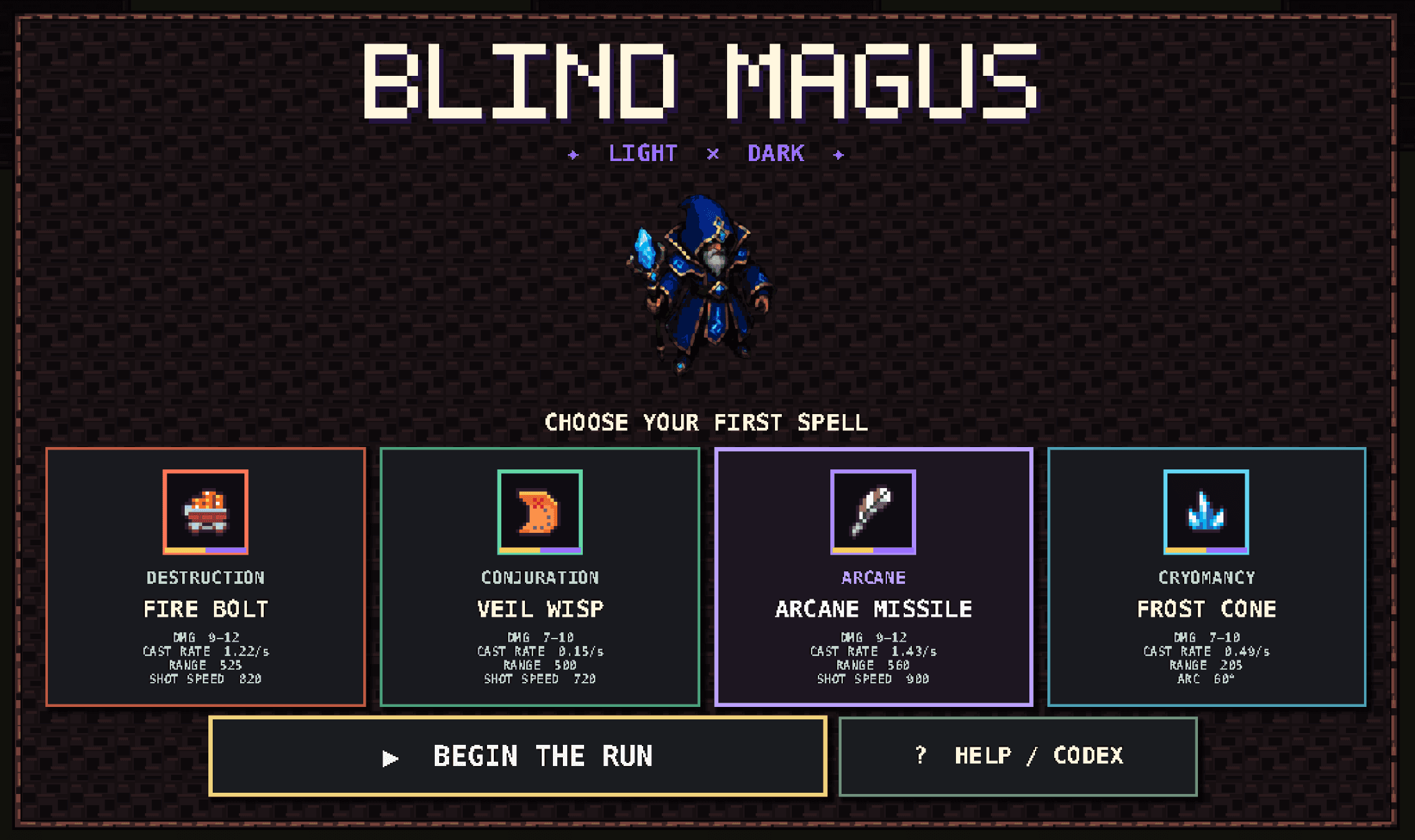
A released action game built around combining spells into new effects.

The Lower Worlds: Awakening project screenshot

06 / Field study

The Lower Worlds: Awakening

Creator and engineer · Playable prototype

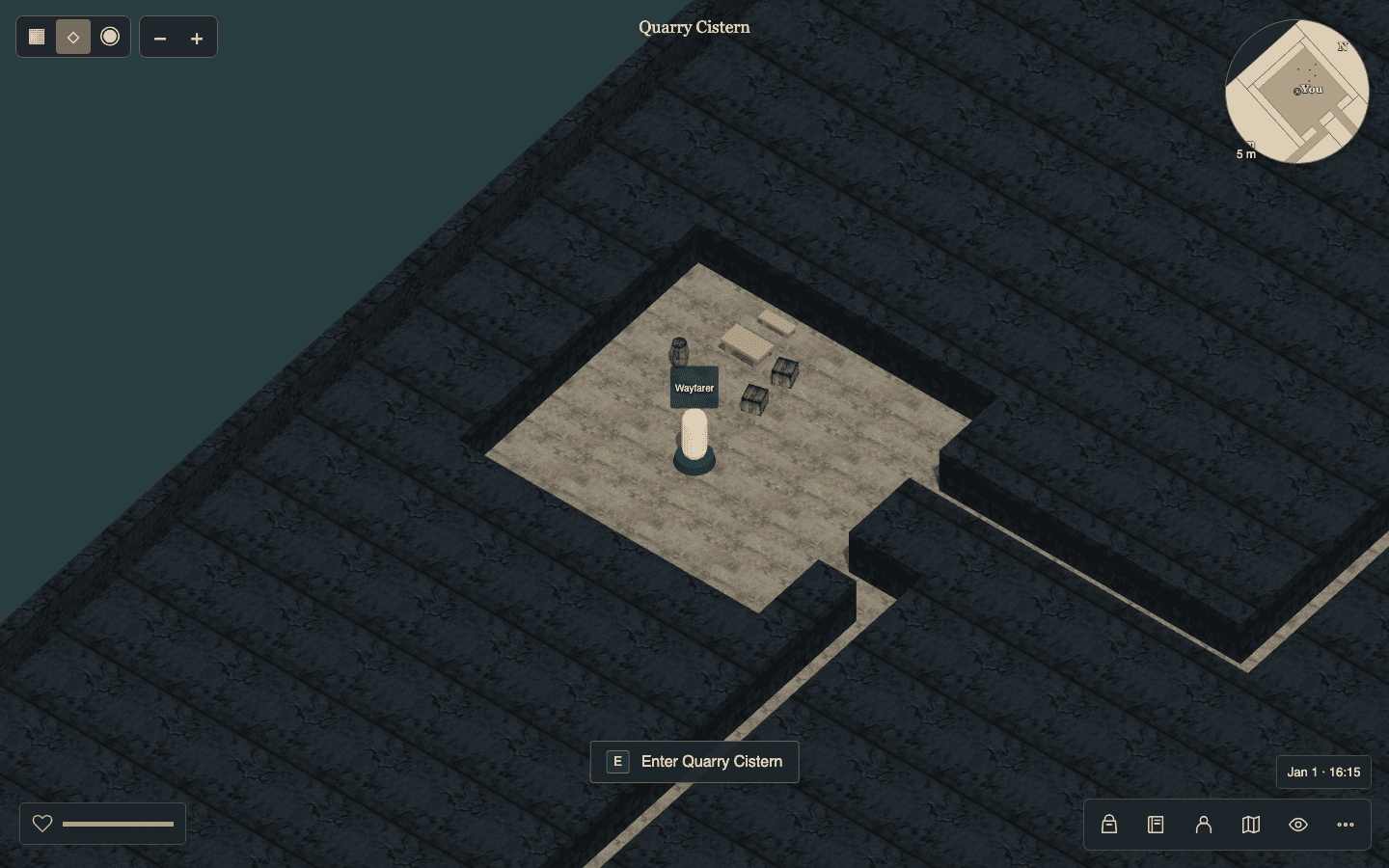
A third-person dungeon adventure in Godot 4.7: prepare at Highbridge, explore the ruins below, and choose when to return to defend the garrison. Typed GDScript, physical puzzles, persistent progression, and rendered gameplay verification.

Chapter 02 / Applied intelligence

Agents &
systems

Local-first tools that make model work inspectable, bounded, and useful in the physical or commercial world.

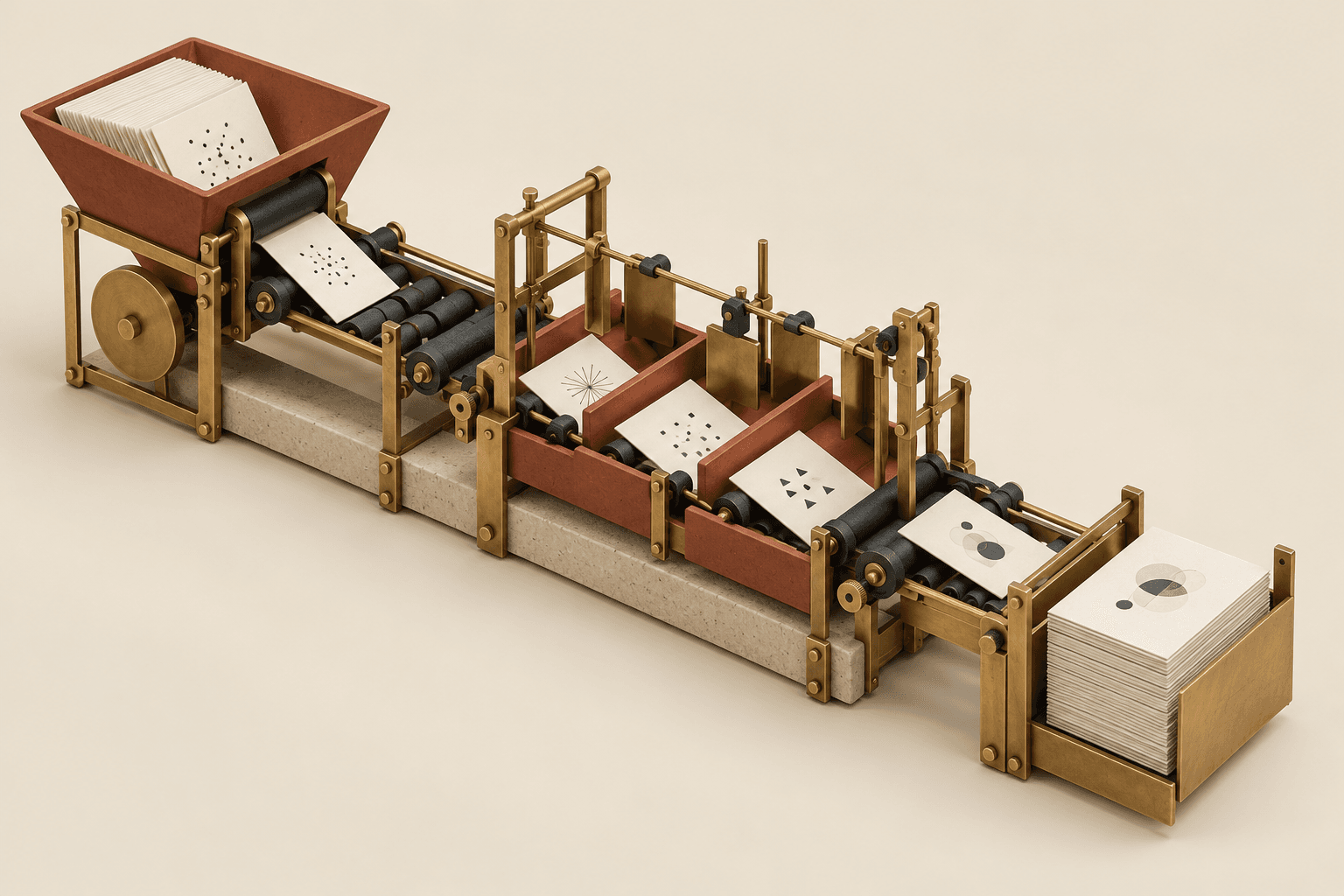
Conceptual study of a speculative workshop machine
Conceptual study / Not actual hardware
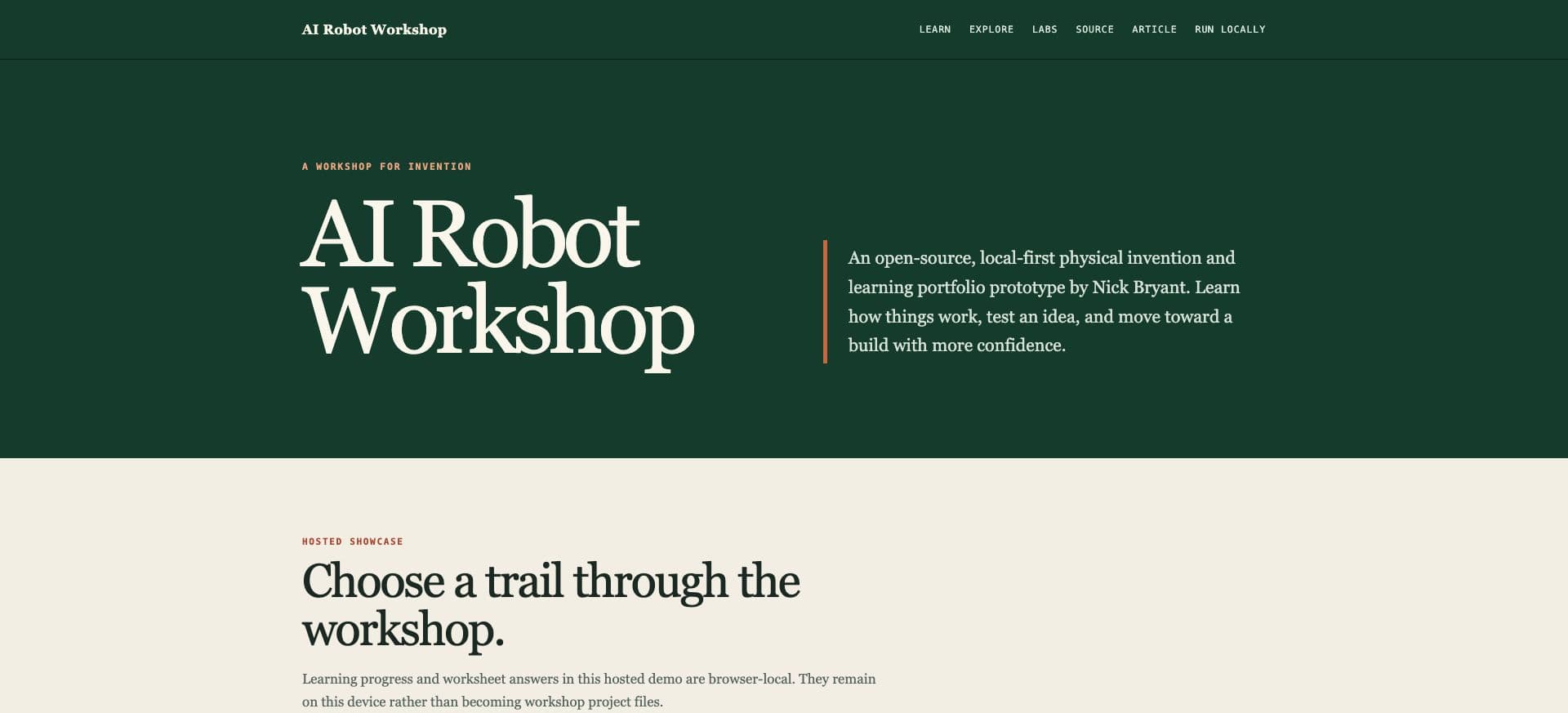
AI Robot Workshop project screenshot

01 / Working system

AI Robot Workshop

Open source · Local-first agent workflow

Turns agent conversations into inspectable plans, firmware, parts records, bounded models, and bench observations. The documented hardware routes remain unbuilt.

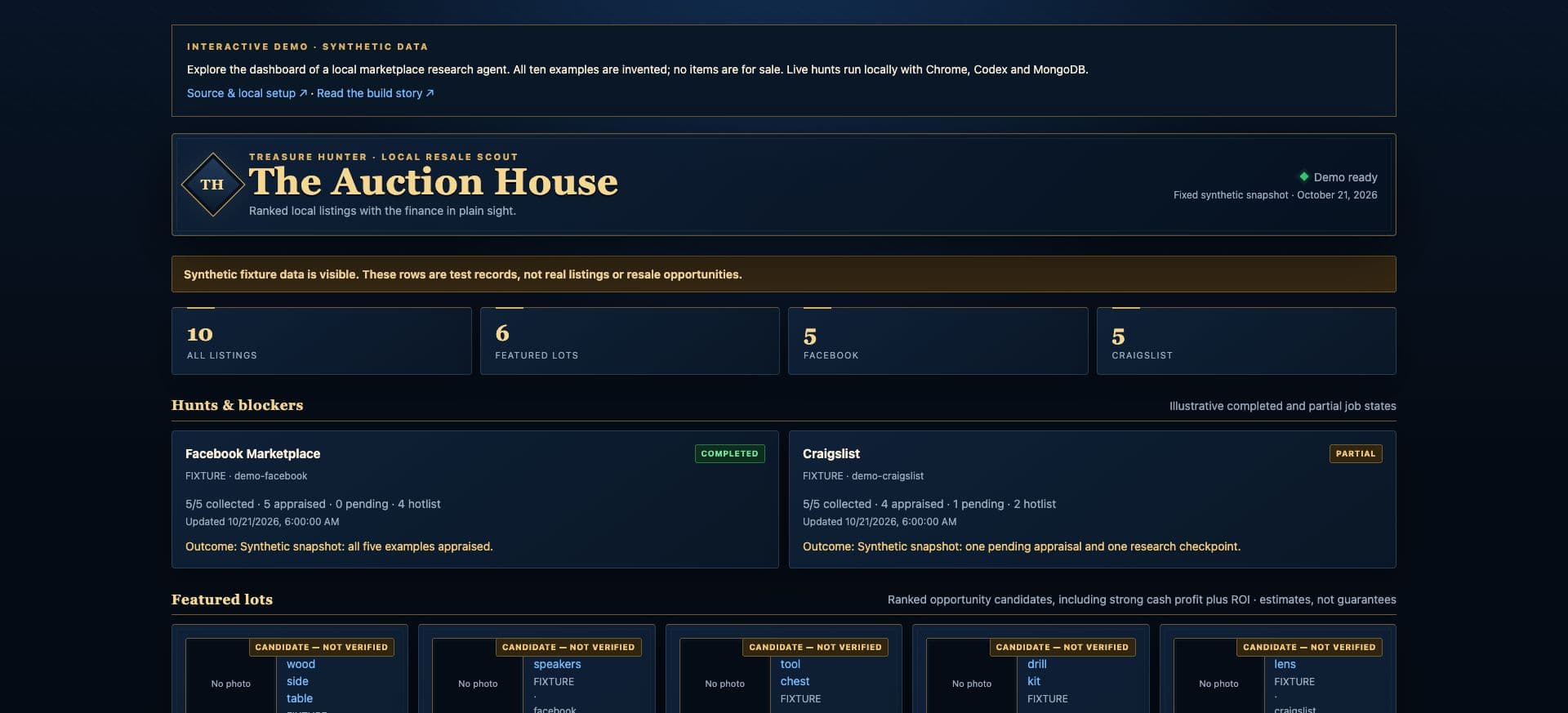
Treasure Hunter project screenshot

02 / Working system

Treasure Hunter

Creator and engineer · Local agent system

A local, chat-operated marketplace agent that values every collected item, persists evidence and checkpoints, and explains its ranked results in a live dashboard.

Chapter 03 / Field notes

Writing from the work

Conceptual editorial study of embossed terrain and printing plates
Concept study / Ideas made durable
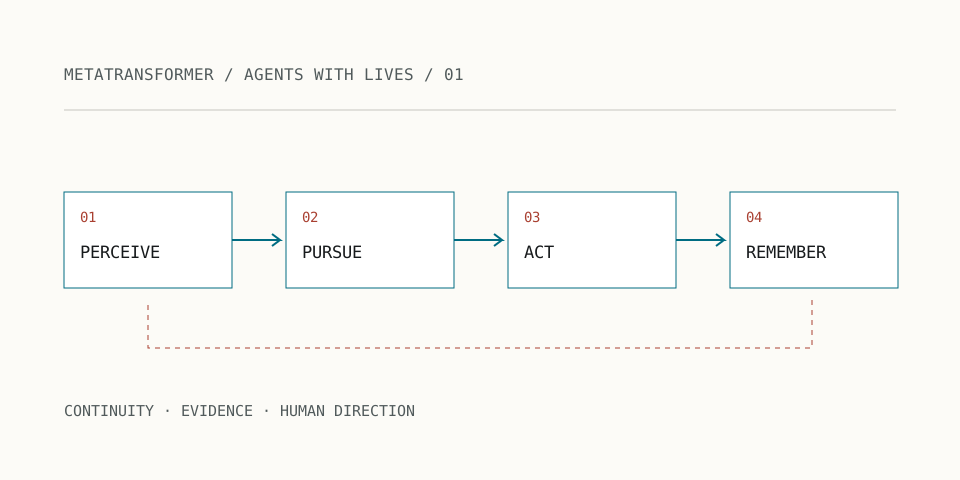
  1. Give Agents Lives, Not Just Jobs

    A1

    Give Agents Lives, Not Just Jobs

    Why I think ongoing pursuits, embodied experience, and a limited point of view can give agents something more interesting to say.

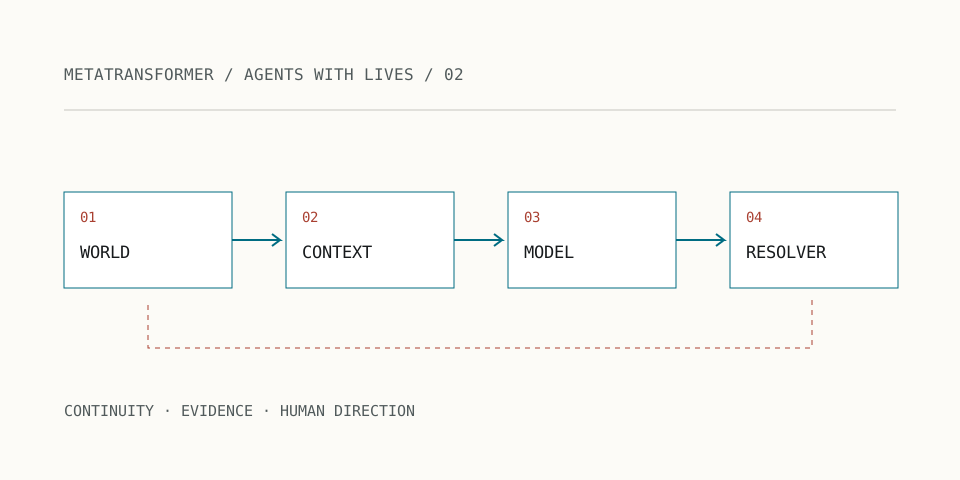
  2. A Small Model With a World Around It

    A2

    A Small Model With a World Around It

    What my local-model companion experiments taught me about structured output, useful conversation, and the architecture around a model.

  3. Human–Agent Interaction Is More Than Chat

    A3

    Human–Agent Interaction Is More Than Chat

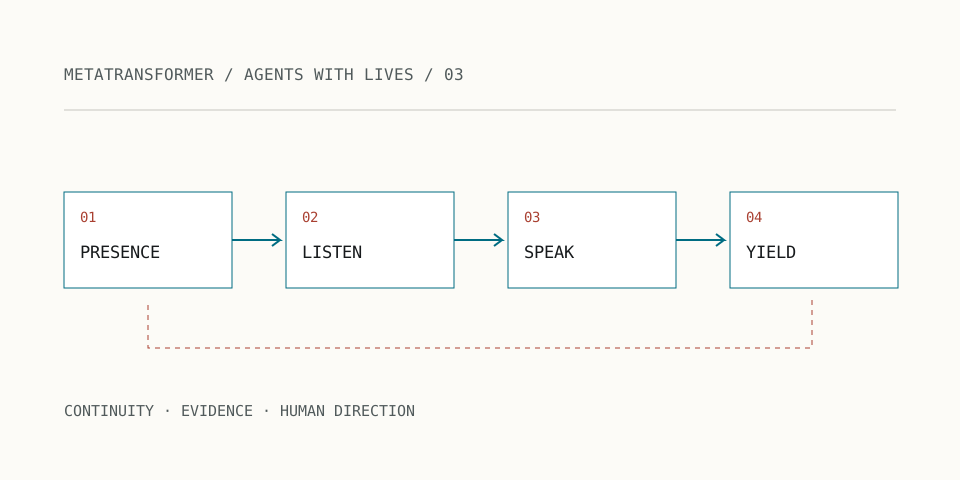
    Presence, silence, interruption, and selective memory are part of the interface when an agent has a continuing life.

  4. Digital Twins Need More Than Your Chat History

    A4

    Digital Twins Need More Than Your Chat History

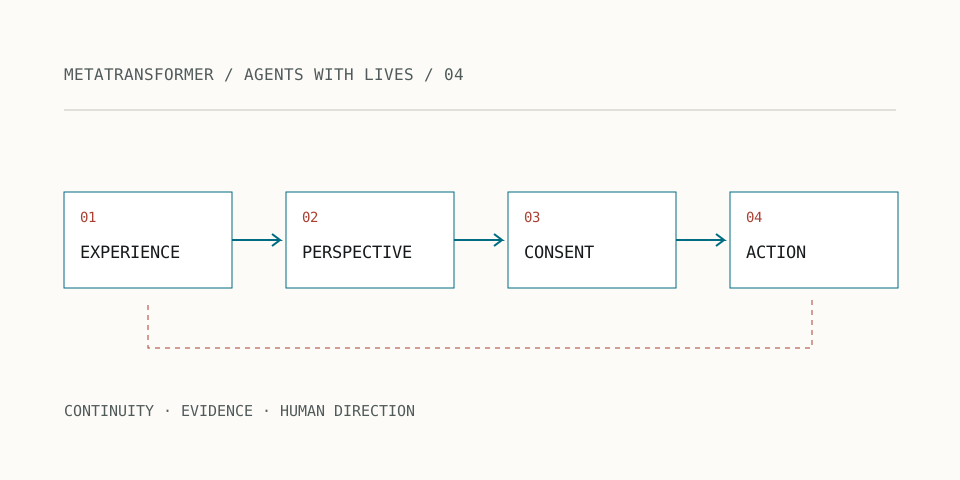
    A useful twin needs a history of changing views, explicit authority, and a distinction between representing someone and becoming its own agent.

  5. Marketing Is a World Agents Can Work In

    A5

    Marketing Is a World Agents Can Work In

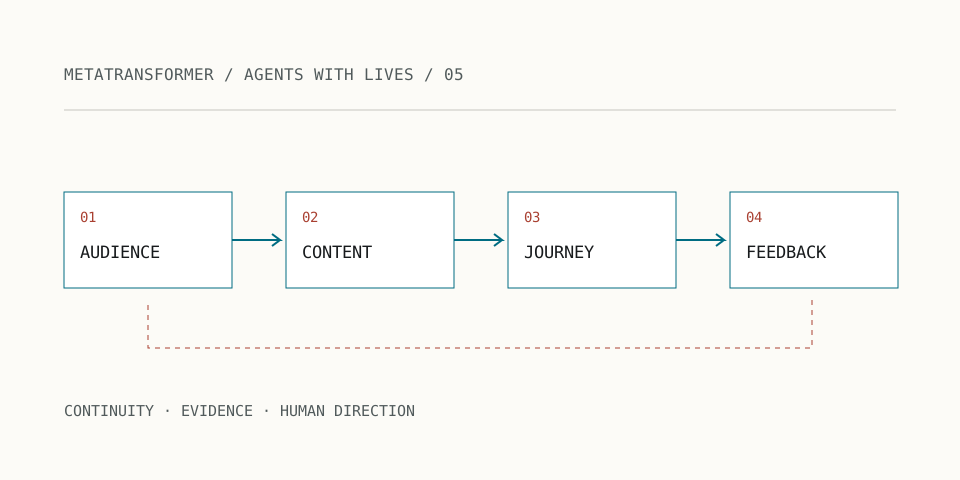
    Lessons from SFV and SMBIN: content, audiences, campaigns, and feedback form an environment an agent can understand.

  6. Treasure Hunter

    01

    Treasure Hunter

    Building an agent that values every item and exposes its evidence, uncertainty, and resumable state.

  7. AI Robot Workshop

    02

    AI Robot Workshop

    From a plausible agent answer to persistent project files, explicit evidence, and a buildable path.

  8. Fractal Authoring

    03

    Fractal Authoring

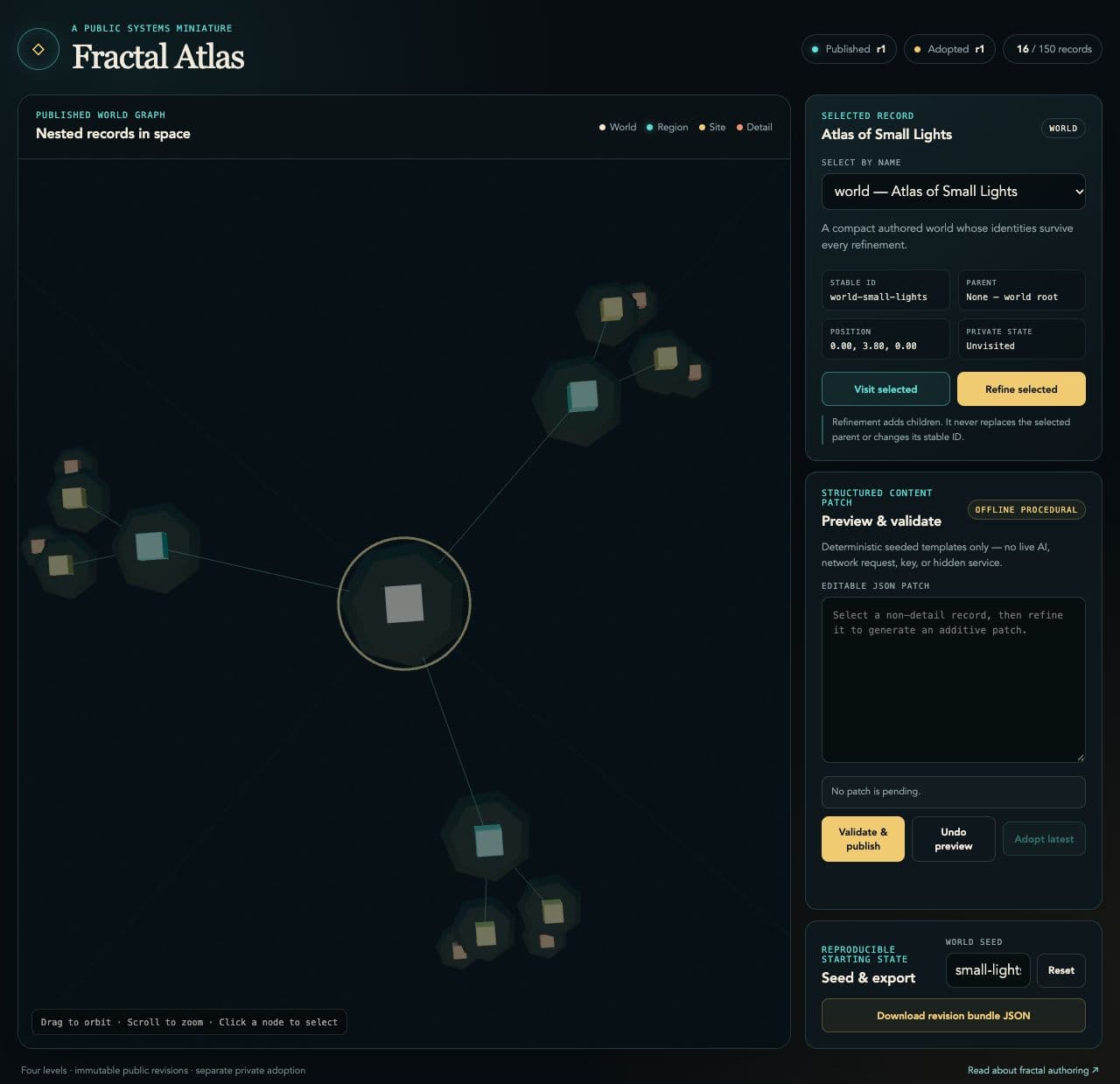
    Building The Lower Worlds Online, and a world that can keep becoming more specific.

  9. Building procedural environments in Valenfeld

    04

    Building procedural environments in Valenfeld

    A practical look at shaping generated terrain into a world with authored intent.

  10. The Transformer Is the Transistor

    05

    The Transformer Is the Transistor

    A thesis on AI as a building block, and the verification and coordination infrastructure models need around them.

  11. The Lower Worlds: Awakening

    06

    The Lower Worlds: Awakening

    Building a home worth returning to: a playable Godot adventure, with in-engine screenshots and source.

Chapter 04 / About

Builder,
end to end.

Portrait of Nick Bryant

I’ve spent most of my career taking an idea and building the whole thing: the prototype, the product, and the team. Web, mobile, games, AR/VR, AI—I like learning what a hard problem needs and getting it working.

Right now I’m deep into agentic programming and generative worlds, trying to build things that weren’t practical a few years ago.

Denver / Boulder

Selected work

ARCOS / VN.AI

IP workflows · Next.js / Supabase / MongoDB / Redis / AWS

I led product engineering for IP management, permitted-use workflows, and content analysis. We connected roughly twenty model integrations and supported product pilots across the application and cloud stack.

Selected work

Procurement Sciences

B2B software · MERN / Python / FastAPI

I rebuilt an early Rails prototype as a MERN and Python/FastAPI product. I implemented the application, managed the engineering team, and hired the incoming CTO before the handoff.

Current · advisory

Investing systems

Investing / syndication · Co-founder, now advisory

I built investing and syndication software, AI-assisted underwriting workflows, investor reporting, and marketing automation for SMB Investor Network and Search Fund Ventures. My current role is passive advisory work.

2015–2020

Interesting Inventions

Consumer apps & games · Technical co-founder

Built and launched 5+ consumer applications through a holding-company portfolio, reaching nine-figure revenue scale.
Full career on the resume ↗
Cohort
Editorial illustration

The founding cohort · Boulder, Colorado

Five people. A year of serious building.

A proposed founder-led peer studio for people building across software, electronics, mechanics, and robotics, then showing the work clearly enough for another builder to question and extend it.

Cohort
5 members
Commitment
Full-time immersion

Exceptional part-time participation considered

Proposed tuition
$500/month

$6,000 over 12 months

A founder-led peer studio

The founder builds alongside the cohort.

Nick builds too. He organizes the cadence, pairs complementary skills, and convenes reviews of the actual work. Members choose projects from day one and learn through a shared rhythm of making, testing, explaining, and helping one another.

The studio is still in formation. Focused reviews with experienced practitioners are an aspiration; no specialist support, speakers, partnerships, or outside access are confirmed.

A concrete week

The next Friday is close enough to matter.

Five different projects stay legible to one another without pretending everyone should learn at the same speed.

  1. Monday

    Choose the milestone

    Commit to one observable result for the week. Name the interface, mechanism, test, and evidence that will make it real.

  2. Tuesday–Thursday

    Build, pair, test

    Work in focused blocks, study the foundation each build requires, pair when another discipline helps, and keep failures visible long enough to understand them.

  3. Friday

    Live demo and publish

    Run the machine, review the code and design, answer direct questions, then publish what changed, including the result that did not work.

  4. Independent study

    Build the missing foundations

    Coursework, reading, simulation, and practice continue between shared reviews. Members may need different foundations while meeting the same milestone rhythm.

Draft shared culture

How we work when the answer is not obvious.

High agency

Notice what is missing, define the next move, and bring back evidence instead of waiting for a perfect assignment.

Generous peers

Share hard-earned knowledge, credit the person and project you learned from, and help without taking over someone else’s build.

Honest evidence

Distinguish a clean demo from a dependable system. Keep test conditions, interventions, limitations, and failed runs available for review.

Ability with fire

Bring an exceptional mind, a deep skill, and a hunger to learn. Put that energy into difficult work with people whose abilities complement yours.

Build, show, share, connect

Make the work easy to inspect.

Publishing is a technical practice here. Camera work, narration, public logs, and useful technical conversations help others understand what changed and why.

Build

Make the software, electronics, and mechanism meet in one testable system.

Show

Practice camera framing, concise narration, and live explanation until another builder can see what changed.

Share

Keep public build logs with decisions, measurements, code, acknowledgments, and failures worth learning from.

Network

Contribute to workshops and technical conversations before asking for access. Useful work creates a reason to keep talking.

The proposed offer

A year in Boulder, built around visible work.

The proposal is five members, full-time immersion, weekly demos, shared skills, and founder coordination for $500 per month. Exceptional part-time participation may be considered when the commitment preserves the shared cadence.

$6,000 over 12 months

Tuition supports coordination, shared planning, weekly reviews, publishing practice, and community convening.

Personal hardware, external courses, compute, makerspace access, and travel are not included unless a written agreement explicitly says otherwise.

In formation

Help shape the first cohort.

Prospective cohort conversations are open. Boulder is the intended home, with shared in-person build time and independent study. The exact venue, start date, equipment, access, and specialist support are still being finalized.

Future workshops, talks, project feedback, and relationships across Boulder, the Front Range, and the wider startup world are goals, not confirmed partnerships or promised access. No payment should happen before the schedule, inclusions, costs, cancellation terms, and participation terms are written and agreed.

Practical questions

Read before you inquire.

What backgrounds fit the cohort?

Experienced software engineers, scientists, medical professionals, founders, designers, operators, and unusually capable career changers may fit. We look for exceptional ability from any field, intellectual fire, intelligence, dedication, and generosity. That can show through deep expertise, unusual accomplishments, or the way you think through a difficult problem. Starting gaps in code, circuits, mechanics, or math are expected; the scope and foundation plan must still be credible for the year.

Is a degree required or awarded?

No degree is required, and the studio does not award one. This is an independent, non-accredited, founder-led peer studio. We get to know you through a conversation about your work, interests, and what you want to build. There is no reference-checking process or credential checklist.

Is this full-time?

Full-time participation is the expectation. An exceptional part-time arrangement may be considered case by case when the person can agree to shared build hours, Friday reviews, and a project scope that will not weaken the cohort rhythm. That arrangement would be explicit before joining.

Which projects will we build?

Members choose their projects from day one. The catalog offers 24 starting points, including four suggested core briefs covering mission control, an arm taught from demonstrations, a Reachy application, and a rover. Follow that reference route or propose your own project. We agree the scope and map it to shared skills in software, electronics, mechanics, and testing. Everyone participates in weekly demos and peer learning.

Where will the studio meet?

In Boulder, Colorado, with a mix of shared in-person build time and independent study. The exact venue and start date are still being finalized. No makerspace, university, accelerator, or community venue has promised access to the cohort.

What equipment is included?

The final written agreement will name any shared equipment or access that is actually included. For now, personal hardware, external courses, compute, makerspace access, and travel should be treated as separate costs. Project selection will follow the confirmed cohort budget and appropriate tool training.

What outcome is promised?

No degree, employment, placement, earnings, investment, fundraising, or startup result is promised. The intended work is concrete: working systems, public demonstrations, technical logs, reviewed design decisions, stronger collaboration habits, and relationships formed through useful contributions. Each member still owns the uncertainty of what follows.

Why is the proposed tuition $500 per month?

The proposed $500 monthly tuition supports founder coordination, shared planning, weekly reviews, the publishing rhythm, and community convening for a five-person cohort. It is not priced as bundled hardware, course licensing, compute, travel, or guaranteed specialist instruction. The complete schedule, inclusions, costs, cancellation terms, and total $6,000 over 12 months must be agreed in writing before any payment.

Build with serious peers

Bring one deep skill. Build the rest together.